
Why Is Office Aircon Leaking? Key Causes
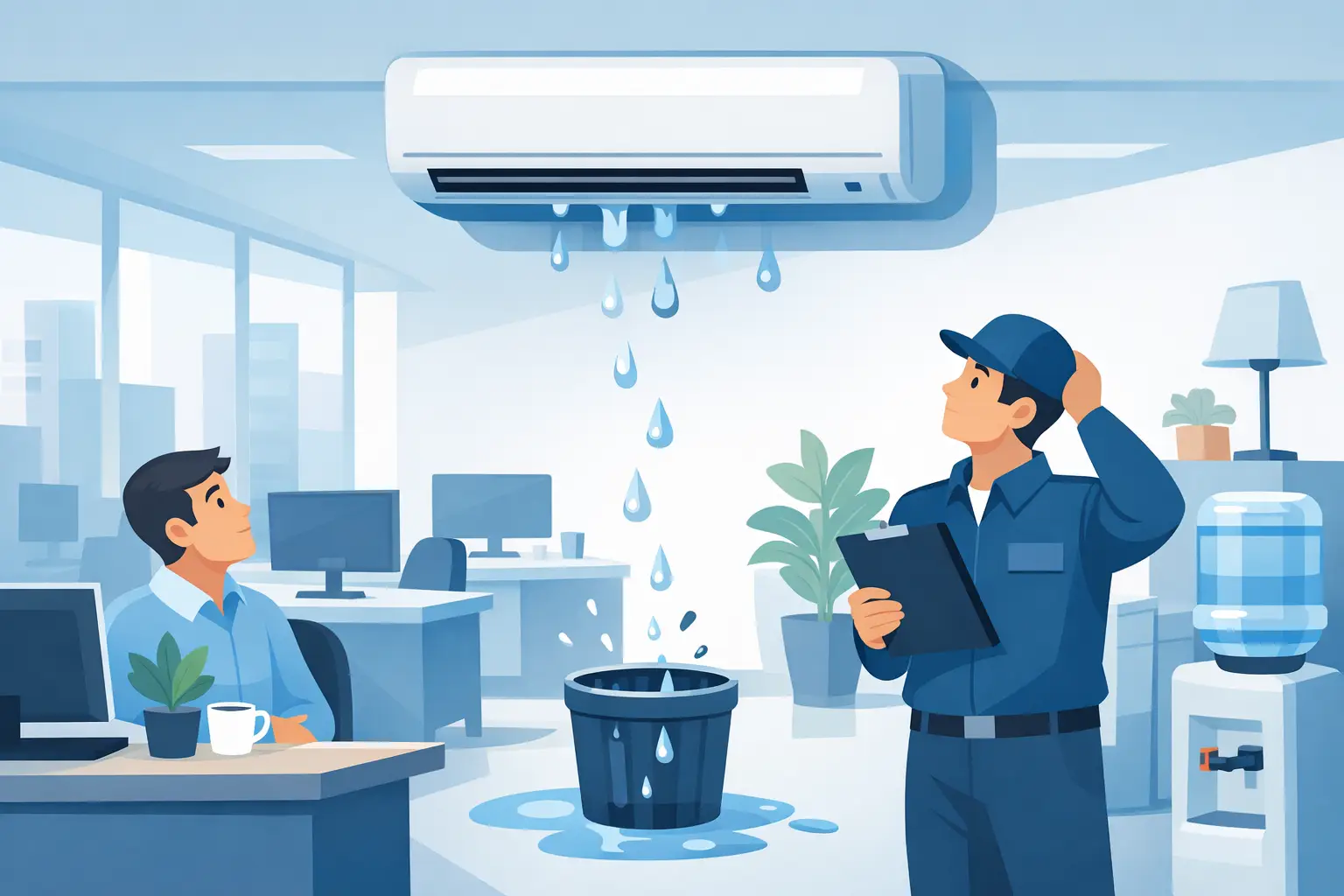
A puddle beneath an indoor unit, water marks on a ceiling tile or a steady drip onto office flooring is more than an inconvenience. If you are asking, why is office aircon leaking, the immediate priority is to protect people, electrical equipment and the building fabric. The underlying fault may be minor, but continued operation can turn a straightforward maintenance visit into damaged finishes, disrupted working areas and avoidable downtime.
Air conditioning does not normally leak water into an office. It removes humidity from the air as part of the cooling process, then channels that condensation safely away through a drain line or pump. A visible leak usually means that route has become blocked, damaged, poorly installed or overwhelmed. In some cases, the water is a symptom of a wider system issue that needs qualified investigation.
Why is office aircon leaking from the indoor unit?
A blocked condensate drain is the most common cause
As warm office air passes over a cold evaporator coil, moisture condenses and collects in a tray beneath the coil. From there, it should flow through the condensate pipework to a suitable drain point. Dust, airborne debris, biofilm and sludge can build up in the tray or pipe over time. Once the line blocks, the tray fills and overflows.
This is particularly common in busy offices, retail spaces and hospitality environments, where airborne particles and regular use place more demand on internal components. A musty smell, reduced airflow or occasional dripping before a full leak can all point to a drain line that needs cleaning.
A competent engineer will clear and flush the drain, inspect the tray and confirm that water is flowing away correctly. Simply wiping up the water without dealing with the blockage leaves the cause in place.
Condensate pump failure
Where gravity drainage is not possible, many commercial systems use a condensate pump to lift water to a drain. These pumps are compact but critical. If the float switch sticks, the pump loses power, the discharge pipe blocks or the pump reaches the end of its service life, condensate can back up into the indoor unit.
Pump faults often produce intermittent leaks. Water may only appear after the system has been running for some time, when the internal reservoir has filled. A humming noise, repeated stopping and starting, or water appearing around a ceiling cassette are useful signs for a service engineer.
A frozen evaporator coil
Ice on the indoor coil can lead to a substantial water leak once it melts. The unit may still seem to cool initially, but airflow often becomes weak and the problem worsens as the coil freezes over.
Restricted airflow is one possible cause. A heavily soiled filter, blocked coil or failed indoor fan reduces the amount of warm air moving across the coil, allowing its surface temperature to fall too low. Low refrigerant charge can also cause coil freezing. This requires particular care: refrigerant work must be carried out by an appropriately F-Gas certified engineer, who can locate and rectify the source of any leak rather than simply add refrigerant.
Switching a frozen system off can limit further water damage, but it does not resolve the fault. Do not chip ice from the coil or attempt to remove covers while the unit is energised.
Installation and pipework faults that cause aircon leaks
Not every leak is caused by a lack of maintenance. The design and condition of the drainage installation matter just as much.
A condensate pipe needs the correct fall where it relies on gravity. If pipework is level, runs uphill, has sagged over time or contains unnecessary bends, water can sit in the line and eventually overflow. Incorrectly sized pipework can create similar problems on systems with high condensate volumes.
Poorly insulated refrigerant pipework can also cause condensation to form on the outside of the pipe rather than inside the unit. This is often mistaken for a leaking air conditioner. In ceiling voids, that moisture can drip onto tiles, insulation or electrical containment far from the indoor unit itself.
On ducted systems and larger commercial installations, damaged insulation, failed tray connections and blocked common drain runs can affect several areas at once. The visible drip is not always where the fault started, which is why a proper inspection matters.
Could the water be coming from somewhere else?
Before assuming the air conditioning is at fault, consider the timing and location of the leak. Water from a roof defect, plumbing pipe, sprinkler system or neighbouring unit can collect around an air conditioning cassette and make it appear responsible.
However, if the leak occurs only while cooling is operating, becomes worse on hot or humid days, or is accompanied by reduced cooling performance, the air conditioning system is the likely source. An engineer can distinguish between condensate, pipe insulation sweating and an unrelated building-water issue before work begins.
What to do when office air conditioning starts leaking
The first action is practical risk control. Move computers, stock, documents and furniture away from the affected area. If water is close to lighting, sockets, data equipment or the unit’s electrical controls, isolate the air conditioning system if it is safe to do so and follow your site’s electrical safety procedures.
Place suitable containers beneath a controlled drip only where this can be done safely. Avoid climbing ladders to access ceiling cassettes or removing panels. Water inside an HVAC unit can be close to electrical components, and an apparently simple blockage may conceal a pump, fan or refrigeration fault.
Record when the leak began, whether the unit was cooling at the time, and any changes in noise, airflow or displayed fault codes. This information helps an engineer diagnose the issue efficiently, particularly on multi-unit systems or sites with building management controls.
A prompt call-out is advisable where water is entering a ceiling void, affecting electrical equipment, dripping in a public area or causing repeated disruption. For a small, contained leak, the required response depends on the system, location and business risk. A meeting room unit may be less urgent than a leak above a server rack, reception desk or production area, but neither should be left until the next season.
The business cost of leaving a leak unresolved
Water damage is the obvious concern, but it is not the only cost. A blocked drain can encourage microbial growth in the condensate tray and affect the condition of the indoor unit. A frozen coil can increase energy use while reducing comfort. If refrigerant loss is involved, continued operation risks compressor damage, which is considerably more expensive than addressing the original fault.
For landlords and facilities teams, recurring leaks also create avoidable complaints, maintenance administration and potential disputes over damage. For workplaces, poor temperature control can quickly affect staff comfort, customer experience and productivity.
There is a compliance dimension too. Refrigerant-containing systems require responsible management, and suspected refrigerant leaks should be assessed by qualified personnel. Clear maintenance records help demonstrate that equipment is being managed appropriately and can support warranty requirements where applicable.
Preventing future office aircon leaks
Planned preventive maintenance is the most reliable way to reduce leakage risk. The right service frequency depends on operating hours, occupancy, environment, system type and the criticality of the space. A lightly used small office may need a different programme from a restaurant, retail unit, medical setting or data room.
During a proper maintenance visit, engineers should inspect and clean condensate trays and drain lines, test pumps and safety switches, assess filters and airflow, check coils, inspect insulation and look for signs of refrigerant or performance issues. The aim is not simply to make the unit look clean. It is to identify deterioration before it interrupts operations.
For commercial sites, documented servicing also gives facilities managers a clearer picture of asset condition, recurring faults and likely replacement requirements. That supports more predictable budgeting and avoids making decisions under pressure during a breakdown.
Optim PRO supports Midlands businesses with planned servicing, repairs and compliance-focused maintenance for commercial air conditioning systems. The practical value of regular attention is simple: a clean drain, correctly operating pump and well-performing coil are far less likely to leave water on your office floor.
If an office unit is leaking today, treat it as a building and business-continuity issue rather than a cleaning task. Protect the area, avoid unsafe access, and arrange a qualified inspection so the source is corrected before a small drip becomes a wider disruption.