

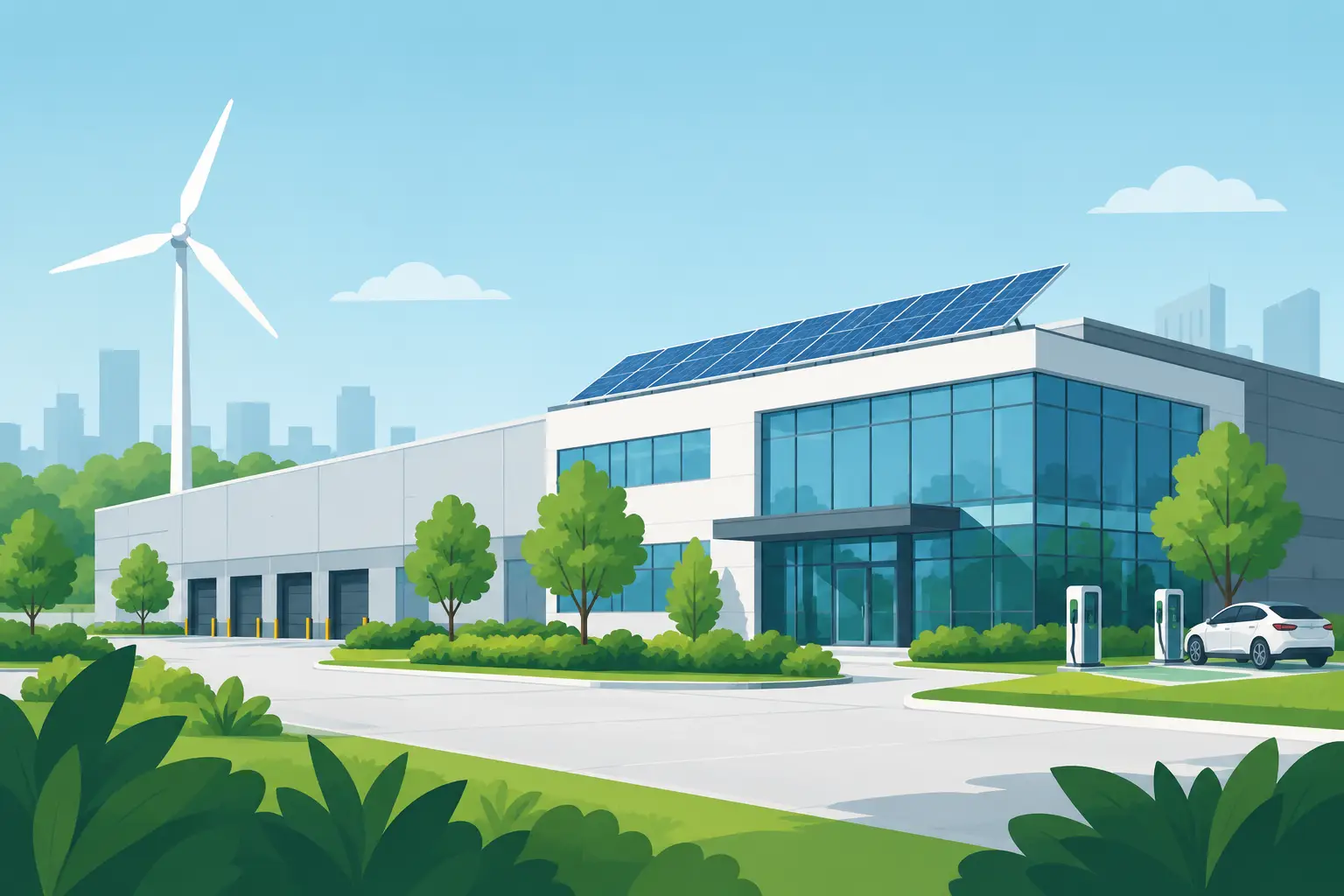
Building Decarbonisation for Commercial Sites
A struggling air conditioning system can quietly undermine a building’s carbon plans long before it fails completely. It may still cool occupied areas, but longer run times, refrigerant loss, blocked filters and poorly configured controls can push energy use far beyond what the business expects. Building decarbonisation is therefore not only a future capital project. For commercial property operators, it starts with knowing how existing building services are performing and acting on the causes of waste.
For offices, retail sites, hospitality venues, warehouses and critical environments across the Midlands, the practical challenge is balancing lower emissions with uptime, comfort, compliance and budget control. The right approach is phased, evidence-led and tailored to the building. Replacing equipment can be the right decision, but it is not the first answer in every case.
What building decarbonisation means in practice
Building decarbonisation is the process of reducing the greenhouse gas emissions associated with operating a property. In most commercial premises, those emissions come primarily from heating, cooling, ventilation, hot water, lighting and the electricity used to run equipment.
The focus is often placed on major changes such as replacing fossil-fuel heating or installing renewable generation. Those measures can have a significant effect, but they work best when the building is already using energy efficiently. Installing new low-carbon plant into a poorly controlled or poorly maintained system can leave the underlying waste untouched.
For many businesses, the sensible sequence is to establish a reliable baseline, reduce avoidable demand, optimise the systems already in place and then plan targeted upgrades. This protects continuity of operation while giving decision-makers a clearer case for investment.
It also avoids treating carbon reduction as a separate facilities initiative. Energy spend, occupant comfort, asset condition, statutory responsibilities and planned maintenance budgets are closely connected. A decarbonisation plan that ignores any one of them is less likely to deliver lasting results.
Start with the systems that run every day
HVAC is a priority because it is both energy-intensive and central to how a commercial building functions. Cooling and ventilation requirements vary throughout the year, but systems often operate on fixed schedules, setpoints or controls that no longer reflect actual occupancy.
A practical review should look beyond whether units are working. It should assess their condition, operating hours, temperature settings, control strategy, maintenance history and recurring faults. It should also consider where different systems are working against each other, such as simultaneous heating and cooling or ventilation running at full capacity in lightly occupied areas.
A site may not need a wholesale replacement to achieve meaningful savings. Correcting a control issue, restoring airflow, cleaning heat exchangers or repairing a refrigerant leak can reduce unnecessary energy consumption while improving comfort. These actions are particularly valuable where equipment is relatively young, has a viable remaining service life and is supported by available parts.
Maintenance is a carbon-control measure
Planned preventive maintenance is sometimes viewed only as a way to avoid breakdowns. It is also a direct part of energy management. Dirty filters restrict airflow. Coil contamination reduces heat transfer. Worn components can cause systems to cycle inefficiently. Incorrect refrigerant charge affects capacity and increases power demand.
Regular servicing identifies these issues before they develop into a costly failure or prolonged period of inefficient operation. It also creates useful records: asset condition, repair history, refrigerant activity and recommendations for future works. For facilities managers responsible for several sites, consistent documentation makes it easier to compare performance and prioritise expenditure.
F-Gas requirements deserve particular attention. Refrigerant leakage has both operational and environmental consequences, and the correct inspection, repair and record-keeping arrangements depend on the system and refrigerant charge. Working with appropriately certified engineers helps businesses manage those obligations while protecting equipment performance and manufacturer warranty conditions.
Controls often offer the fastest gains
Controls determine when HVAC equipment runs, how hard it works and whether it responds appropriately to the building’s needs. Poorly commissioned controls can waste energy even where the plant itself is in good condition.
Common improvements include aligning schedules with genuine opening hours, setting realistic temperature deadbands, zoning areas with different occupancy patterns and using demand-led ventilation where appropriate. Reception areas, meeting rooms, server spaces, kitchens and storage areas do not necessarily require the same settings or operating hours.
There is no universal setpoint that suits every building. A retail environment may need a different comfort strategy from a small office or a hotel. Critical spaces may require tighter control, and reducing run time may not be acceptable. The aim is not to switch systems off indiscriminately. It is to remove avoidable operation without compromising safety, product quality, occupant wellbeing or business continuity.
Plan upgrades around asset life and site risk
As HVAC assets age, repair costs, energy use and reliability risk can increase together. At that point, a replacement decision should be based on more than the price of the next repair. Consider the unit’s efficiency, fault frequency, parts availability, refrigerant type, remaining service life and the consequence of failure for the business.
Modern air conditioning and heat recovery ventilation systems can provide more efficient comfort control than older equipment when correctly designed, installed and commissioned. In suitable applications, heat recovery can reduce the energy required to temper incoming fresh air by transferring heat between exhaust and supply air streams. This can be particularly relevant in buildings with sustained ventilation demand.
However, an upgrade must suit the building fabric, electrical capacity, occupancy profile and existing services. A larger system is not automatically a better system. Incorrect sizing can lead to poor control, short cycling, discomfort and avoidable capital cost. A site survey and load assessment are essential before specifying replacement plant.
Phasing is often the most commercially sensible route. High-use, poor-performing or high-risk assets can be addressed first, while viable equipment is maintained and monitored. This spreads capital investment, reduces disruption and allows the organisation to make decisions using operating data rather than assumptions.
Measure performance, then manage it
Decarbonisation programmes lose momentum when results cannot be seen. Metering and routine performance reviews turn energy reduction into an operational discipline rather than a one-off project.
Useful measures may include electricity consumption, HVAC run hours, maintenance call-outs, comfort complaints, fault trends and the condition of priority assets. Comparing data against occupancy and weather conditions provides more useful insight than reviewing utility costs alone. A rise in consumption may be explained by a busier trading period, but it may also identify a system running outside agreed schedules.
For multi-site businesses, a standard asset register and planned maintenance programme provide a strong foundation. They help identify which sites require immediate intervention, which can be optimised through controls, and which need a longer-term replacement plan. This supports more predictable budgeting and avoids emergency decisions made after a failure.
Keep compliance and carbon plans aligned
Energy efficiency works best when it reinforces, rather than competes with, compliance responsibilities. Safe access, electrical integrity, refrigerant management, ventilation performance and service records all require ongoing attention. Deferring maintenance to reduce short-term expenditure can create higher energy bills, premature asset failure and greater operational risk later.
Landlords and building owners also need to consider the property’s wider energy performance obligations when planning works. Requirements can vary according to building type, tenancy arrangement and project scope, so technical and legal advice should be taken where needed. The practical point is simple: keep accurate records and build carbon improvements into the normal asset-management cycle.
A dependable service partner should be able to explain what an engineer has found, what it means for the business, and which actions are urgent, beneficial or suitable for future budgeting. That clarity matters when a facilities team is balancing competing demands across an occupied estate.
Building decarbonisation becomes manageable when it is treated as a sequence of well-informed operational decisions. Start with the systems consuming energy every day, maintain them properly, correct avoidable waste and plan replacement around evidence. The most effective next step is often a site review that turns asset condition, energy use and compliance records into a practical programme of work.