
What is HVAC? A Business Owner’s Guide to Climate Control in the Midlands
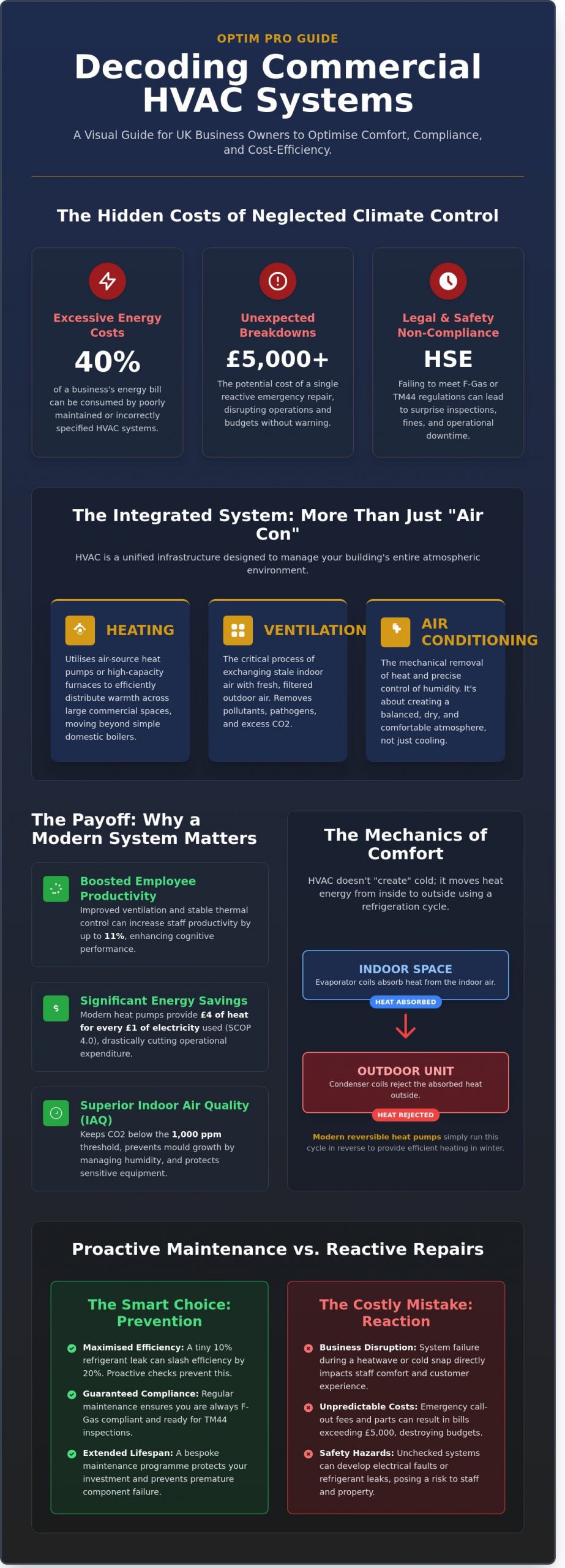
Over 40% of a UK business’s energy expenditure is often swallowed by hvac systems that are poorly maintained or incorrectly specified. It’s understandable if you find technical terms like BTU ratings, VRF, or F-Gas compliance confusing; most Midlands business owners prioritising their daily operations feel the same way. You want a comfortable environment for your staff without the fear of a surprise HSE inspection or an unexpected £5,000 repair bill. Managing a commercial property is complex enough without worrying about whether your air quality meets the latest standards.
We’ve designed this guide to demystify these complex systems, providing you with the clarity needed to optimise your climate control for 2026 and beyond. You’ll learn how to identify key components, slash your operational costs through improved efficiency, and ensure your premises remain fully compliant with current UK safety standards. This guide provides a straightforward roadmap to choosing a reliable local partner who ensures your infrastructure remains a safe pair of hands. This ensures you can focus on your business while we handle the technical details of your bespoke maintenance programme.
Key Takeaways
- Understand why modern climate control is a unified system designed to balance thermal comfort with essential indoor air quality for your staff and customers.
- Master the complexities of UK building compliance, from mandatory F-Gas regulations to the legal requirements for TM44 inspections on larger systems.
- Explore the mechanics of hvac infrastructure to learn how efficient heat transfer and proactive leak detection can significantly reduce your annual energy expenditure.
- Recognise the subtle signs of system distress and understand the financial advantages of choosing preventative maintenance over expensive, reactive emergency repairs.
- Discover how bespoke installations tailored specifically to Midlands building stock can provide a permanent, reliable climate solution for your business.
Understanding HVAC: More Than Just Air Conditioning
For many UK business owners, climate control is often simplified to just “the heating” or “the air con.” However, What is HVAC? at its core is a unified system designed to manage the entire atmospheric environment of a building. HVAC stands for Heating, Ventilation, and Air Conditioning. It functions as a single, integrated infrastructure rather than a collection of separate machines. Its primary purpose is to maintain thermal comfort and high indoor air quality (IAQ). In high-occupancy offices, this system acts as the “lungs” of the building. It ensures that CO2 levels remain below the 1,000 ppm (parts per million) threshold recommended for peak cognitive performance. Unlike a standalone fan or a plug-in radiator, a permanent hvac system provides a constant, automated cycle of fresh, filtered air.
The Three Pillars of Climate Control
- Heating: Commercial systems move beyond domestic boilers. We design systems utilising air-source heat pumps or high-capacity furnaces to distribute warmth efficiently across large floor plates.
- Ventilation: This is the critical, often overlooked process of air exchange. It replaces stale indoor air with filtered outdoor air, removing pollutants, VOCs, and pathogens.
- Air Conditioning: This involves the mechanical removal of heat and the precise control of humidity levels. It’s not just about cooling; it’s about creating a balanced, dry atmosphere.
Why Modern Buildings in Warwickshire Need Integrated Systems
Buildings in Warwickshire face varied conditions, with outdoor humidity levels often exceeding 80% during damp autumn periods. A permanent hvac system manages these fluctuations automatically, preventing mould growth and protecting sensitive office equipment. Research from the World Green Building Council indicates that improved ventilation and thermal control can boost employee productivity by 11%. This isn’t just a comfort issue; it’s a financial one.
While portable units might seem cost-effective during a July heatwave, they’re noisy, inefficient, and fail to provide adequate filtration. Permanent infrastructure offers a seamless, professional solution that maintains a steady 21°C regardless of the weather outside. This level of control is essential for retail spaces where customer comfort directly impacts dwell time and sales. Investing in a bespoke, permanent system ensures your business remains compliant with current UK building regulations while providing a safe, healthy environment for your staff.
How HVAC Systems Function: The Mechanics of Comfort
At its core, an hvac system operates on the principles of thermodynamics, specifically the transfer of thermal energy. It doesn’t simply “create” cold air; it extracts heat from an internal space and rejects it outdoors. This process relies on a closed-loop system where refrigerants, such as R32, change state from liquid to gas to absorb and release energy. Maintaining precise system pressure is critical. A refrigerant leak of just 10% can reduce operating efficiency by 20%, which is why automated leak detection is a standard requirement for F-Gas compliance.
Air distribution is the final stage of the process. Conditioned air travels through galvanised steel ductwork, entering rooms via strategically placed diffusers. These components are designed to eliminate “hot spots” by ensuring a uniform throw of air across the floor plan. The entire operation is coordinated by smart controls and thermostats. These digital brains monitor internal sensors 24/7, adjusting output in real-time to match the building’s occupancy levels. If your current controls feel unresponsive, you might need to optimise your existing setup to regain efficiency.
The Cooling and Heating Cycles
The refrigeration cycle uses evaporator coils to absorb heat from indoor air and condenser coils to dissipate it outside. Modern reversible heat pumps have transformed this process, allowing the cycle to run in reverse during winter. These systems often achieve seasonal performance factors (SCOP) of 4.0, meaning they provide £4 of heat for every £1 of electricity consumed. Inverter Technology is a method for variable speed motor control to save energy. This allows the compressor to ramp up or down rather than constantly switching on and off.
The Vital Role of Ventilation and Air Quality
Modern, airtight office blocks in the Midlands can’t rely on natural ventilation alone. To remain compliant with Midlands business regulations and standards, mechanical ventilation is essential for maintaining safe oxygen levels. In cities like Birmingham, HVAC systems use HEPA and activated carbon filters to strip away nitrogen dioxide and particulate matter (PM2.5) from urban traffic.
In high-density Coventry workplaces, managing CO2 levels is a priority to prevent “Sick Building Syndrome.” When CO2 concentrations exceed 1,000 parts per million (ppm), cognitive function can drop by 15%. Mechanical ventilation systems mitigate this by:
- Extracting stale, humid air from kitchens and washrooms.
- Introducing filtered “fresh” air from outside.
- Recovering up to 90% of the heat from outgoing air to pre-warm the incoming supply.
HVAC Requirements for Midlands Businesses: Regulations and Standards
Managing a commercial property in the Midlands involves more than just occupant comfort. You’ve got to comply with strict legal frameworks to ensure safety and energy efficiency. Under the Workplace (Health, Safety and Welfare) Regulations 1992, the HSE mandates that indoor temperatures stay “reasonable,” which usually means at least 16°C for office-based work. Your hvac system must also provide a constant supply of fresh air to prevent the build-up of CO2 and airborne pollutants.
The Energy Performance of Buildings (England and Wales) Regulations 2012 require a TM44 inspection every five years. This is mandatory for any system with a combined cooling output exceeding 12kW. Failing to produce a valid TM44 report can result in a £300 fine per building, and it can negatively impact your Energy Performance Certificate (EPC) rating. Since April 2023, commercial properties must have an EPC rating of ‘E’ or higher to be legally leased, making efficient climate control a financial necessity.
F-Gas Compliance and Your Legal Duties
Since the 2014 F-Gas Regulation was adopted into UK law, business owners are legally responsible for preventing leaks of fluorinated greenhouse gases. You must use Refcom-certified engineers for all installation and maintenance tasks. Civil penalties for non-compliance can reach £200,000 under the Fluorinated Greenhouse Gases Regulations 2015. To stay compliant, you should:
- Maintain an up-to-date F-Gas Logbook for every individual unit.
- Schedule mandatory leak checks every 3 to 12 months, based on the system’s CO2 equivalent.
- Only hire technicians with a valid F-Gas handling certificate to ensure safety.
Server Room Cooling: A Critical HVAC Sub-sector
For businesses in Nuneaton and Leicester, server room uptime is vital. Standard office air conditioning isn’t built for the 24/7 heat load generated by modern data racks. If temperatures exceed 30°C, hardware failure rates can increase by 50% in a single afternoon. We design bespoke cooling solutions that utilise redundant N+1 configurations. This ensures that if one unit fails, your critical data remains protected. Investing in a dedicated hvac setup for your IT infrastructure prevents costly downtime and extends the lifespan of your hardware.
Optimising Your HVAC System for Performance and Longevity
A commercial hvac system represents a significant capital investment. In the UK, these units typically last between 15 and 20 years, provided they receive professional care. Neglecting maintenance often leads to a “death by a thousand cuts” scenario. This is where minor inefficiencies snowball into total system failure. Watch for red flags. If your monthly energy bills spike by 10% or more without a change in usage, your system is working too hard. Grinding noises or musty smells often indicate mechanical wear or biological growth in the ductwork.
- Energy Efficiency: Swapping out clogged filters is the simplest way to protect your bottom line. Data shows that regular filter changes can reduce energy consumption by up to 15% by improving airflow across the evaporator coil.
- System Health: Routine checks catch small issues like refrigerant leaks or worn belts before they cause a full building shutdown.
- Asset Protection: Proactive lubrication of moving parts reduces friction, which is the primary cause of premature motor failure.
The Cost-Saving Power of Regular Servicing
Reactive repairs cost roughly three times more than preventative maintenance. By optimising settings and performing proactive coil cleaning, you prevent major component failures. For businesses in Nottingham and Derby, a structured service agreement offers a clear ROI. It ensures F-Gas compliance while extending the operational life of expensive compressors. Our engineers focus on the fine-tuning that keeps your overheads low and your equipment running smoothly.
Improving Air Quality in Office Environments
Stuffy air isn’t just a comfort issue; it’s a productivity drain. Research indicates that poor ventilation can increase sick leave by up to 35%. Upgrading your filtration to HEPA or MERV 13 standards meets modern post-pandemic requirements. This creates a healthier environment that directly supports staff retention and wellbeing. A well-maintained hvac system ensures a constant flow of fresh, filtered air, removing pollutants and CO2 build-up that lead to afternoon fatigue.
Don’t wait for a breakdown to take action. Contact our expert engineers to book your preventative maintenance visit today.
Bespoke HVAC Solutions in Nuneaton and the West Midlands
Optim PRO delivers robust hvac infrastructure designed for the specific demands of the West Midlands. We understand that a 19th-century brick warehouse in Nuneaton requires a vastly different thermal strategy than a glass-fronted office in Coventry. Our engineers focus on permanent, scalable systems that integrate seamlessly with your existing building management systems. By prioritising F-Gas compliant technology and inverter-driven compressors, we help businesses reduce annual energy consumption by up to 30% compared to legacy setups.
Reliability is our cornerstone; we act as a “safe pair of hands” for your facility. This means providing 24/7 emergency support to ensure your operations never stall due to environmental failure. We don’t just install equipment; we build long-term partnerships that lead your business toward a more sustainable, energy-efficient future through proactive maintenance and smart technology integration.
Why Choose a Local Specialist for Your Warwickshire Business?
Choosing a Nuneaton-based independent contractor like Optim PRO ensures your business benefits from rapid response times. For critical repairs in Coventry or Bedworth, our teams often arrive on-site in under four hours. We possess a deep understanding of local Mechanical and Electrical (M&E) requirements and Warwickshire planning permissions. This local insight allows us to navigate regulatory hurdles faster than national chains, providing a personalised service that keeps your project on track and within budget.
Getting Started with a Professional HVAC Audit
A professional hvac audit is the first step toward a more sustainable future. During our initial site survey, we assess your current thermal load, ductwork integrity, and ventilation rates. We then design bespoke solutions tailored to your specific sector:
- Retail: Precise temperature control for customer comfort and stock preservation.
- Office: High-efficiency VRF systems that offer individual zone control for staff wellbeing.
- Industrial: Heavy-duty units capable of managing high heat gains from manufacturing machinery.
Our assessment provides a clear roadmap for system upgrades, detailing projected ROI and carbon footprint reductions. If you’re ready to improve your air quality and lower your overheads, book your HVAC consultation with Optim PRO today to receive a comprehensive system assessment from our certified engineering team.
Secure Your Commercial Climate Strategy
Managing a commercial facility in the West Midlands requires more than simple temperature control. It’s a strategic commitment to operational efficiency and legal compliance. Modern hvac systems must adhere to strict UK F-Gas regulations to avoid heavy fines and unexpected system failures. Research indicates that proactive maintenance can extend equipment life by up to 10 years while preventing the 15% efficiency drop-off typically seen in neglected units. Prioritising bespoke solutions ensures your infrastructure handles the specific demands of your Nuneaton or Birmingham site.
Our Refcom certified engineers are experts in high-value commercial installations and provide 24/7 emergency support across the region. We don’t just fit units; we design systems that lower your carbon footprint and reduce overheads. Taking control of your building’s environment today prevents costly surprises tomorrow. Whether you’re upgrading an existing setup or planning a new fit-out, professional oversight is your best protection against downtime.
Ensure your business is compliant and efficient-request an HVAC survey from Optim PRO
Your path to a more reliable and cost-effective climate starts with a professional assessment.
Frequently Asked Questions
What does HVAC stand for in the UK?
HVAC stands for Heating, Ventilation, and Air Conditioning. It’s the collective term for the mechanical systems that regulate temperature and air quality within your commercial premises. While the acronym is used globally, UK businesses must ensure their systems meet specific British Standards such as BS EN 378 for safety and environmental requirements. Our engineers design these systems to provide a seamless indoor climate regardless of external weather conditions.
Is HVAC the same as air conditioning?
No, air conditioning is just one component of a complete HVAC system. While air conditioning specifically focuses on cooling and dehumidifying air, a full system encompasses the boiler, radiators, and ventilation ducts that circulate fresh air. We provide bespoke solutions that manage all three elements to ensure a consistent internal environment throughout the year. It’s a holistic approach to climate control rather than just a cooling fix.
How often should a commercial HVAC system be serviced in Birmingham?
You should schedule professional servicing at least twice every 12 months for commercial HVAC systems in Birmingham. High-traffic areas like city centre offices or retail units often require quarterly inspections to maintain peak efficiency. Regular maintenance by a F-Gas certified engineer prevents the 15% annual efficiency drop often seen in neglected units. This proactive approach ensures your system remains a reliable asset for your business.
What are the F-Gas regulations for small businesses in the Midlands?
F-Gas regulations require small businesses to prevent leaks of fluorinated greenhouse gases from their cooling equipment. If your system contains more than 5 tonnes of CO2 equivalent, you’re legally mandated to have it leak-checked at least once a year. Our Refcom-authorised engineers provide the necessary certification to ensure your Midlands-based firm avoids potential fines reaching £5,000. Compliance is essential for both legal safety and environmental responsibility.
Do I need an HVAC system for my small shop in Nuneaton?
Yes, every retail space in Nuneaton requires adequate ventilation and temperature control to comply with the Workplace (Health, Safety and Welfare) Regulations 1992. A bespoke installation ensures your shop remains at a comfortable 18°C to 24°C, which is the range recommended by the Health and Safety Executive. Proper airflow also prevents damp and mould in smaller commercial units, protecting your stock and your staff’s health.
How much can I save on energy bills by upgrading my HVAC?
Upgrading to a modern system with inverter technology can reduce your energy consumption by 30% to 50% compared to units over 10 years old. Replacing an outdated fixed-speed model with a high-efficiency system often results in an annual saving of £450 for a typical 50-square-metre office. These savings mean most commercial installations pay for themselves within 3 to 5 years through reduced utility costs and lower repair bills.
What happens during a standard HVAC maintenance visit?
During a maintenance visit, our engineers perform a 20-point checklist to ensure your system operates safely and efficiently. This includes cleaning heat exchanger coils, checking refrigerant levels, and testing electrical connections for wear. We also replace air filters and verify that the condensate pumps are clear to prevent water damage. This thorough process ensures your infrastructure stays in a safe pair of hands throughout its lifespan.
Is ventilation mandatory for office buildings in the UK?
Yes, ventilation is mandatory under Part F of the UK Building Regulations. You must provide a minimum supply of 10 litres of fresh air per second per person in an office environment to maintain CO2 levels below 1,000 parts per million. This requirement ensures the health of your staff and prevents the productivity drops associated with poor air quality. We install sensors that monitor these levels automatically to keep your workplace compliant.