

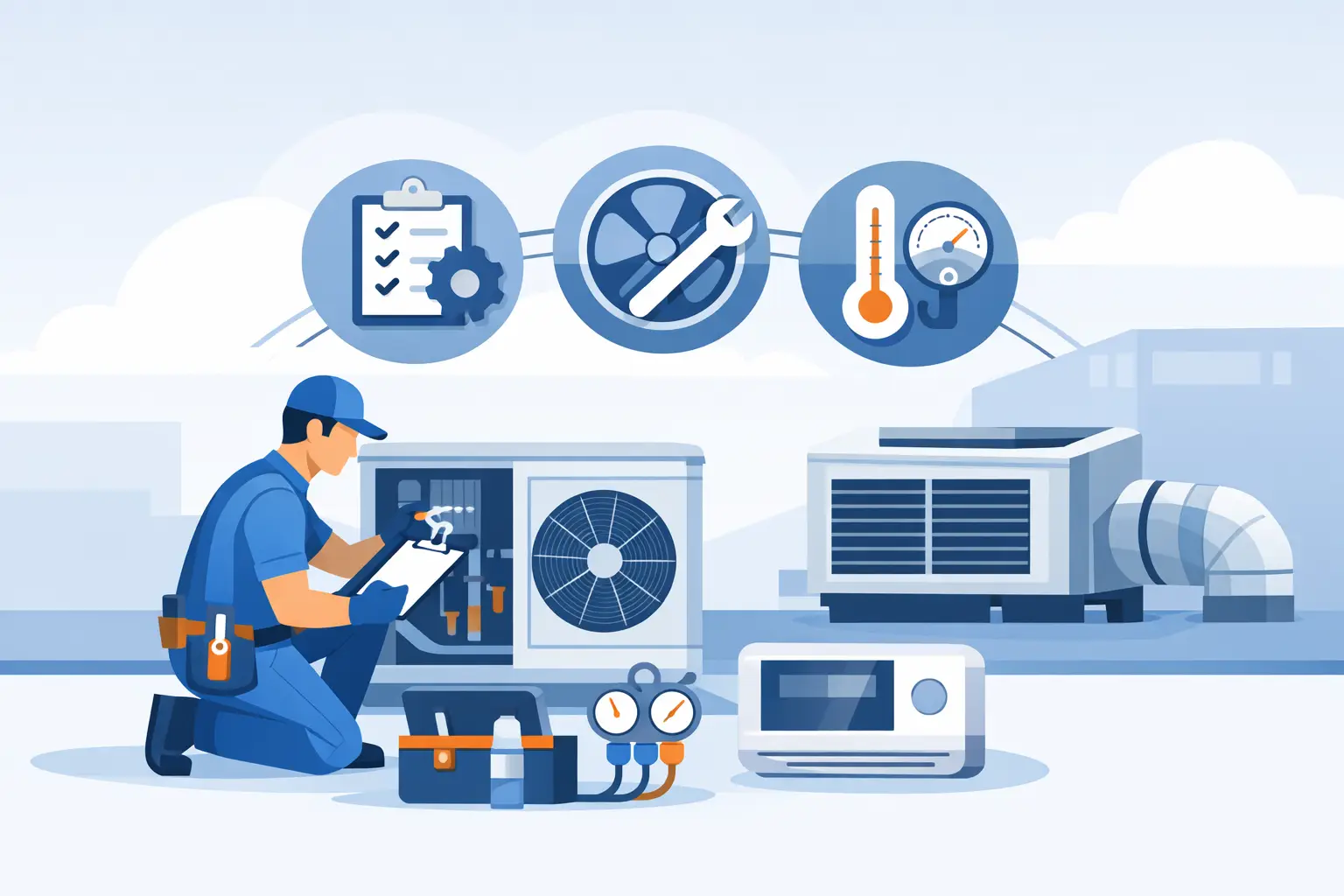
What Does HVAC Planned Maintenance Include?
A failed air conditioning or ventilation system rarely creates a convenient problem. For a shop, office, restaurant, warehouse or critical environment, it can mean uncomfortable occupants, interrupted operations, spoiled stock, lost productivity and an urgent repair bill. Understanding what does HVAC planned maintenance include helps building operators turn an unpredictable risk into a controlled programme of inspections, servicing and documented compliance.
Planned maintenance is not simply a technician arriving to clean a filter. A properly structured programme assesses the condition, safety, efficiency and compliance status of your HVAC assets at agreed intervals. The exact scope should reflect the equipment installed, its operating hours, site conditions, manufacturer requirements and the consequences of system failure.
What HVAC planned maintenance includes in practice
A planned preventive maintenance visit normally begins with a visual and operational inspection. The engineer checks whether indoor and outdoor units are clean, secure, undamaged and operating as intended. They look for warning signs that are easy to miss during normal use, including unusual noise, vibration, water leaks, damaged insulation, blocked airflow and corrosion.
The service then moves beyond appearance. Engineers test key operating conditions and examine the components that most often affect reliability and energy use. For commercial systems, this may include split air conditioning units, VRF or VRV systems, air handling units, fan coil units, heat recovery ventilation and associated controls.
Typical planned maintenance work includes:
- Cleaning or replacing air filters, and cleaning coils, grilles and condensate trays where required.
- Checking fans, motors, belts, bearings, electrical connections, isolators and controls.
- Testing refrigerant circuit performance, checking for signs of leakage and confirming appropriate operating pressures and temperatures.
- Clearing condensate drains and pumps to reduce the risk of water damage, odours and indoor unit leaks.
- Assessing airflow, supply air temperatures, thermostat operation and the overall response of the system.
Each task has a practical purpose. A blocked filter restricts airflow and makes equipment work harder. A poorly draining condensate tray can cause water leaks and bacterial growth. Loose electrical terminals can lead to intermittent faults or component failure. Addressing these issues early is normally quicker, less disruptive and less expensive than responding after a breakdown.
Cleaning that supports performance, not just appearance
HVAC equipment moves large volumes of air, so dirt accumulates where it matters most: filters, coils, fans and drainage systems. When evaporator or condenser coils become contaminated, the system cannot transfer heat efficiently. It may take longer to cool or heat a space, consume more electricity and place added strain on compressors and fans.
The right cleaning method depends on the asset and environment. A lightly used office unit needs different attention from equipment serving a busy kitchen, retail entrance or dusty industrial area. An effective maintenance provider will inspect the actual condition rather than apply the same cleaning schedule to every site.
Electrical, mechanical and controls checks
A planned maintenance inspection also looks at the equipment that keeps the refrigeration circuit and airflow system running. Engineers inspect electrical components for heat damage, wear and poor connections. They check fan operation, listen for bearing noise, assess vibration and review the condition of moving parts.
Controls deserve equal attention. A system can be mechanically sound but waste energy if timers, setpoints, sensors or thermostats are incorrectly configured. Checking controls helps ensure equipment runs when it is needed, reaches the required temperature and does not operate unnecessarily outside working hours.
For multi-zone systems, the engineer may also review whether individual areas are receiving appropriate cooling, heating or ventilation. This is particularly valuable where layouts, occupancy levels or business operations have changed since the original installation.
Refrigerant management and F-Gas compliance
For systems containing fluorinated refrigerant gases, planned maintenance should include compliance-led refrigerant checks. The required leak-checking regime depends on the type and quantity of refrigerant held within the equipment, expressed in CO2 equivalent, alongside the applicable regulations. It is not a one-size-fits-all annual exercise.
An F-Gas certified engineer can inspect the system for evidence of leakage, investigate abnormal operating readings and record relevant work. If a leak is identified, it should be repaired appropriately and followed by the necessary verification before refrigerant is added or the system is returned to service.
Accurate records matter. They demonstrate that refrigerant-containing equipment is being managed responsibly and give facilities teams a clear maintenance history for each asset. That history is useful during audits, property transactions, warranty discussions and fault diagnosis. It can also reveal a recurring issue before it becomes a major repair.
Reports, asset records and recommended actions
A maintenance visit should leave your business with more than a verbal update. A clear service report records the equipment attended, work completed, observations, test results where relevant and any defects or recommendations identified.
For a facilities manager, this documentation creates a practical audit trail. You can see which units have been serviced, what needs attention and whether an issue is developing across a site or estate. For landlords and building owners, it provides evidence of a responsible approach to asset care and compliance obligations.
A useful report separates urgent remedial work from longer-term recommendations. For example, a damaged electrical component may require prompt action, while a unit approaching the later stages of its expected service life may call for budget planning rather than immediate replacement. This distinction supports sensible decision-making and prevents every observation being treated as an emergency.
How often should HVAC maintenance be carried out?
The correct frequency depends on risk, usage and equipment type. Many commercial systems benefit from at least one or two planned visits each year, but heavily used, business-critical or high-contamination environments may need more frequent attention. A data room, healthcare setting, food service area or continuously occupied site cannot be treated in the same way as a small, lightly used office.
Manufacturer warranty terms may also specify servicing requirements. Failing to maintain equipment in line with those requirements can complicate a warranty claim, even when the original installation was sound. Planned servicing protects day-to-day reliability while supporting the evidence manufacturers may require.
Seasonal timing makes a difference too. Servicing cooling equipment before warmer weather helps identify weaknesses before demand rises. Reviewing heating and ventilation performance ahead of colder months can avoid disruption when occupants rely on the system most. The best programme is based on how your building operates, not simply a date in the diary.
What planned maintenance does not always include
A maintenance agreement is designed to identify and reduce faults, not guarantee that no part will ever fail. Components such as compressors, circuit boards, fans and pumps can reach the end of their service life without warning, particularly in older equipment or systems that have experienced demanding operating conditions.
It is therefore worth checking exactly what your agreement covers. Routine labour, scheduled inspections, cleaning, compliance records, call-out response, repairs and replacement parts may be treated differently depending on the service tier. A clear scope avoids uncertainty when a fault occurs and allows you to choose a programme that matches the operational importance of each site.
Likewise, a maintenance visit may identify wider issues outside the unit itself, such as inadequate ventilation design, poor access for servicing, damaged pipework insulation or electrical supply concerns. These are not reasons to avoid maintenance. They are the kind of issues that become more expensive when left unidentified.
Choosing a maintenance programme for your site
The strongest maintenance programmes start with an asset and site review. This identifies the equipment in place, its age, refrigerant type, location, condition and role in the operation. From there, visits can be planned around usage patterns, compliance needs and the cost of downtime.
A single retail premises may need a straightforward scheduled service and reliable repair support. A multi-site operator may need consistent reporting, asset registers and planned visits coordinated around trading hours. For critical cooling or ventilation, faster response arrangements and closer condition monitoring may be justified.
Optim PRO approaches planned maintenance as ongoing asset protection rather than a box-ticking visit. The aim is to keep systems efficient, documented and dependable, while giving decision-makers a clear view of condition, risk and next steps.
The most useful maintenance plan is one that gives you fewer surprises: cleaner equipment, better records, controlled energy use and enough notice to deal with developing faults before they disrupt the building.