
Air Conditioning Breakdown Response for Businesses
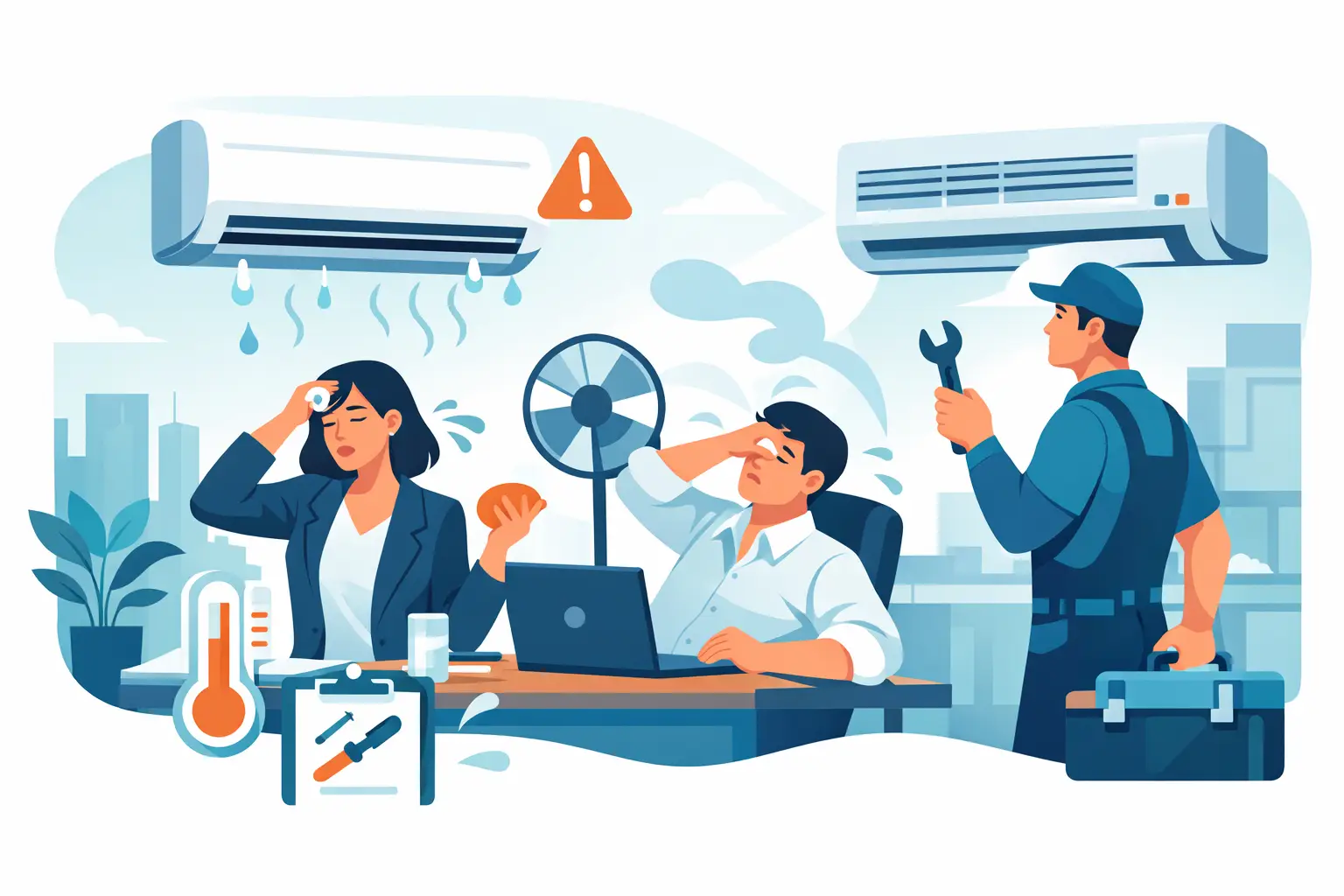
When a commercial air conditioning system fails at 10am on a trading day, the problem is rarely just temperature. Staff lose focus, customers cut visits short, server rooms edge towards risk, and managers are pulled away from higher-value work to deal with an urgent building issue. That is why air conditioning breakdown response for businesses needs to be planned before a fault happens, not improvised once the complaints begin.
A good response is not simply about getting an engineer to site quickly. Speed matters, but so do diagnosis, parts availability, compliance records, system history, and a service partner who understands the operational cost of downtime. For a retailer, that may mean protecting footfall and stock conditions. For an office, it may be employee comfort and productivity. For a data room or healthcare setting, it can become a business continuity issue within hours.
What air conditioning breakdown response for businesses should cover
An effective breakdown response starts with triage. Not every failure carries the same level of urgency, and treating every call as identical can waste time at exactly the point where clarity is needed. A responsible service provider should identify the affected area, the type of equipment involved, the age and history of the system, and the business impact if cooling is not restored quickly.
That distinction matters. A wall-mounted split system failing in a small meeting room is inconvenient. A failed condenser serving a comms room, production area, restaurant dining space, or occupied office floor can create immediate operational pressure. The right response process prioritises around consequence, not just the order in which calls are logged.
From there, the focus should move to remote assessment, site attendance, fault diagnosis, safe repair, and documentation. If the issue cannot be resolved on the first visit, the next steps should still be clear. Decision-makers need to know whether the problem is electrical, mechanical, refrigerant-related, controls-based, or linked to broader maintenance neglect. They also need realistic timescales and cost implications, not vague reassurance.
The first few hours after a system failure
The first response window often determines whether an air conditioning breakdown becomes a short disruption or a prolonged operational problem. Internally, businesses should confirm which spaces are affected, whether there are vulnerable occupants or temperature-sensitive assets, and whether any temporary measures are needed. That may include restricting occupancy in certain zones, moving staff, protecting IT equipment, or adjusting operating hours.
At the same time, whoever reports the fault should be ready with practical information. Model numbers, site access instructions, symptoms, alarm codes, and details of any previous issues can save time. If a business has no service records, diagnosis often takes longer because the engineer is starting without context. If there is a history of recurring faults, that should shape the repair approach straight away.
This is where planned maintenance pays for itself. Systems that are regularly serviced usually come with cleaner records, more stable performance, and fewer hidden issues. In breakdown situations, that history makes it easier to identify whether the problem is an isolated component failure or part of a wider pattern.
Why fast attendance is only part of the answer
Many businesses understandably focus on response time, but arrival time and resolution time are not the same thing. A rapid visit that leads to a temporary reset, without dealing with the root cause, may restore cooling for a few hours and then fail again at the worst possible moment.
A stronger breakdown response balances urgency with proper engineering judgement. That includes electrical testing, pressure checks where appropriate, controls review, airflow assessment, and confirming whether poor maintenance has contributed to the failure. In some cases, the quickest short-term fix is not the best commercial decision if it leaves the business exposed to repeat call-outs and avoidable costs.
Common causes behind commercial AC breakdowns
Commercial systems usually fail for predictable reasons. Deferred maintenance is one of the biggest. Dirty filters, blocked coils, failed fans, refrigerant issues, electrical wear, and control faults often build gradually before they trigger a shutdown. The actual breakdown may feel sudden, but the underlying deterioration usually is not.
Age also plays a part. Older systems can remain viable with the right servicing, but parts become harder to source and efficiency tends to decline. In these cases, a breakdown response may uncover a larger asset management decision. Repair may still be the right route, especially if the plant has been well looked after. Equally, repeated faults on ageing equipment can make replacement the more sensible financial option.
Usage profile matters too. A system serving a lightly used office is under different pressure from one supporting a busy retail unit, a hospitality venue with kitchen heat gain, or a technical environment running continuously. Businesses need response arrangements that reflect how critical the equipment really is.
Air conditioning breakdown response for businesses and compliance
Breakdowns are not only operational events. They can also raise compliance and warranty issues. If refrigerant loss is suspected, for example, diagnosis and repair need to be handled properly by qualified personnel. If maintenance schedules have not been followed, some manufacturer warranty protections may be weakened or lost altogether.
For many commercial operators, documentation is nearly as important as the repair itself. Facilities teams, landlords, and compliance managers may need service reports, records of findings, confirmation of remedial action, and evidence that work has been carried out by appropriately certified engineers. That is particularly relevant in regulated sectors, managed estates, and tenant-facing properties.
This is one reason businesses often prefer a single service partner rather than relying on ad hoc call-outs from whoever is available. Continuity brings better records, clearer accountability, and a stronger basis for both planned maintenance and emergency response.
Multi-site businesses need a different response model
If you manage more than one site, breakdown response becomes a coordination issue as well as an engineering one. The challenge is not only fixing the fault, but applying a consistent standard across locations, budgets, and reporting lines.
A multi-site retail or office portfolio benefits from having agreed service levels, centralised documentation, and a provider that can prioritise according to business impact. Without that structure, one site may receive a quick repair while another sits with prolonged downtime because the issue was not escalated properly or there was no visibility of system condition beforehand.
Regional coverage matters here. For Midlands businesses, using a service partner with local reach can reduce delays and improve continuity of support, particularly where urgent attendance has to be balanced across multiple properties.
How to judge whether your current response plan is good enough
A simple test is to ask what would happen if your main system failed this afternoon. Who reports it? Who authorises the work? How quickly would an engineer understand the site layout and equipment history? Would anyone know whether the unit is still under warranty? Could you produce the latest maintenance record if asked?
If those answers are unclear, the response plan is probably too reliant on individual memory and goodwill. That works until the wrong person is on annual leave or the failure happens outside normal hours.
A stronger approach sets out responsibilities in advance. It also links breakdown response to planned preventive maintenance, because emergency repairs and routine servicing should not sit in separate silos. They are part of the same objective – keeping the building safe, comfortable, compliant, and operational.
For some businesses, that means an essential service arrangement with reliable reactive support. For others, especially where uptime is critical, it may justify a more structured maintenance programme built around asset longevity, energy performance, and reduced risk of repeat failure. There is no single model that suits every site. What matters is whether the level of support matches the consequence of downtime.
Preventing the next failure while fixing the current one
The best breakdown response does not stop once cooling is restored. It should feed into a practical conversation about why the failure happened and what changes would reduce the chance of recurrence. That may involve cleaning regimes, component replacement, control adjustments, refrigerant checks, or a broader review of whether the existing system is still fit for purpose.
This is where an engineering partner adds more value than a basic repair contractor. A proper assessment looks beyond the failed part and considers energy efficiency, running costs, maintenance intervals, and the age profile of the wider system. For commercial clients, that means better budgeting and fewer nasty surprises.
At Optim PRO, that approach reflects the wider job of supporting business continuity, not just attending faults. The aim should always be to move from reactive disruption towards planned control.
If your business depends on stable indoor conditions, a breakdown should never be the moment you start thinking about response. It should be the moment your existing plan proves its value.