
Why Is My Office Too Hot? Causes and Fixes
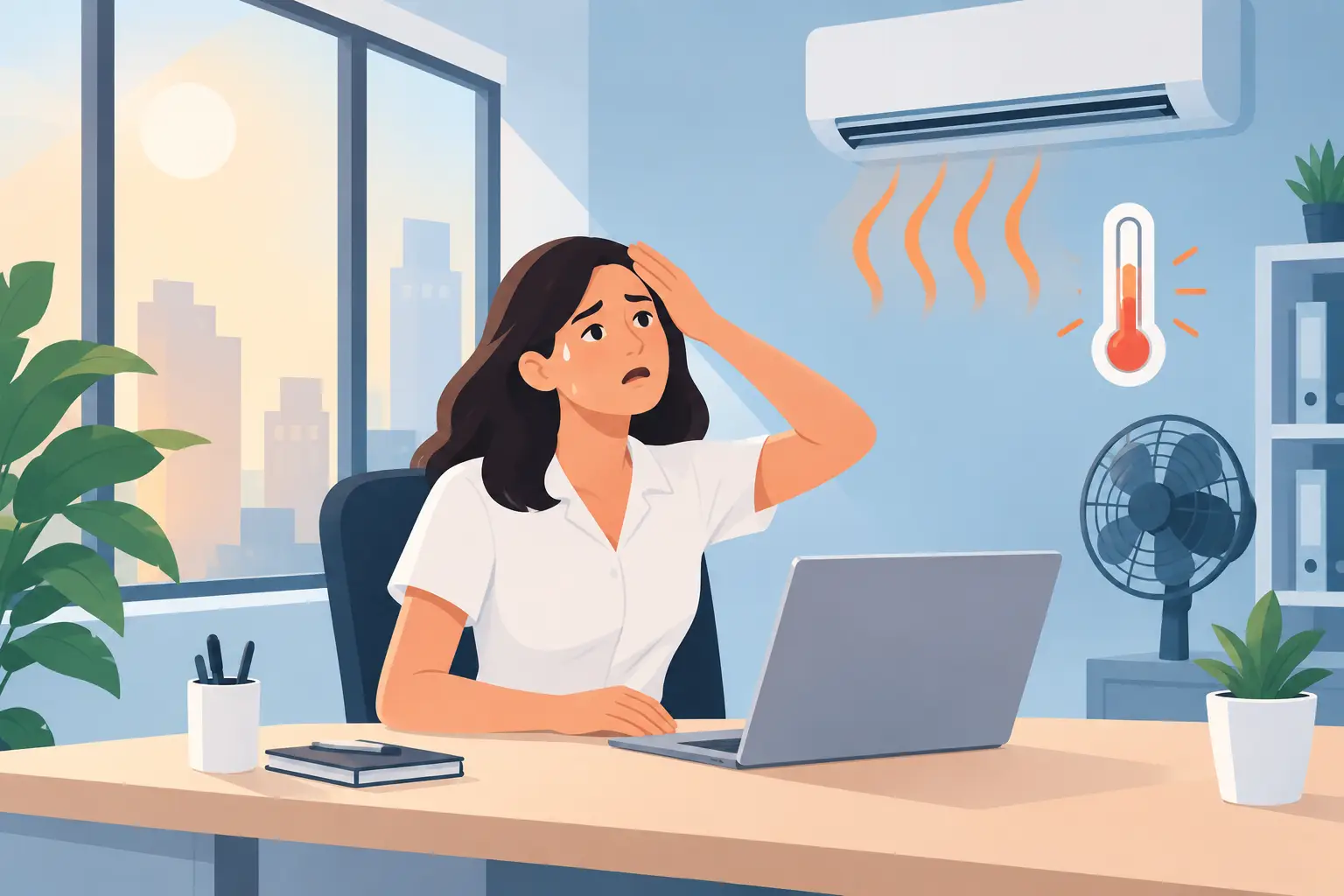
A meeting room that feels stuffy by 10am, staff moving desks to sit near a fan, and repeated complaints on warm afternoons are not minor workplace inconveniences. If you are asking, why is my office too hot, the cause may be a straightforward setting issue, but it can also point to reduced air conditioning capacity, poor airflow, unmanageable solar gain or a system that is no longer suited to how the building is used.
For facilities and operations teams, excess heat quickly becomes an operational issue. It affects concentration, customer experience, equipment reliability and energy spend. The most effective response is not simply to turn the thermostat down. It is to identify whether the system is producing enough cooling, delivering it to the right areas and controlling the heat entering the building.
Why is my office too hot even with air conditioning?
Air conditioning does not fail in one obvious way. A unit may still run, make the usual sounds and show no visible alarm, while delivering significantly less cooling than it should. In a busy office, the issue is often a combination of equipment condition and changing demand.
The thermostat or control strategy is wrong
Start with the basics. A thermostat may be set too high, located in a poor position or reading an unrepresentative temperature. For example, a sensor close to a sunny window, heat-producing printer or draught can cause the system to respond incorrectly.
Controls also need to match occupancy. An office that is lightly occupied at 8am but full by mid-morning may overheat if its system is scheduled to start too late. Equally, a system left in heating mode after seasonal changes can create a persistent and expensive problem. Zoned systems need particular attention: one area may be comfortable while another is receiving insufficient cooling because dampers, fan coils or controls are not responding correctly.
Restricted airflow is limiting cooling
Cooling capacity is only useful if conditioned air can circulate through the space. Dirty filters, blocked grilles, obstructed indoor units and poorly maintained fan coils can all restrict airflow. The result is often uneven temperatures: desks nearest an air conditioning unit feel cold while enclosed offices, meeting rooms or areas further along the ductwork remain hot.
Layout changes are a frequent contributor. New partitions, storage, ceiling alterations or furniture placed beneath wall-mounted units can alter air movement without anyone connecting the change to comfort complaints. In open-plan offices, even a bank of tall cupboards can prevent cool air reaching a previously well-served area.
The system is losing capacity
An air conditioning system may need repair when it cannot remove heat at the expected rate. Common causes include refrigerant loss, a failing compressor, worn fan motors, electrical faults, dirty condenser coils or damaged components within an outdoor unit.
Refrigerant issues require professional investigation. Refrigerant should not need routine topping up. If levels are low, there may be a leak that needs locating and repairing before the system can be safely returned to service. This work must be completed by appropriately certified engineers, with the relevant F-Gas obligations and service records considered.
A condenser unit struggling to reject heat outdoors can be just as damaging to performance. Leaves, dirt, poor clearance around the unit and recirculating hot discharge air can all reduce efficiency, particularly during a warm spell when the system is already under pressure.
The office produces more heat than the original design allowed for
The cooling load in an office changes over time. More employees, higher-density desk layouts, additional monitors, server cabinets, printers, catering equipment and extended opening hours all add heat. A system designed for a modest office may not cope once the space is used intensively every day.
Meeting rooms are often the clearest example. They may be comfortable when empty, then become uncomfortably hot within half an hour of a full meeting. Occupants, laptops and presentation equipment can create a sharp rise in heat load. If the room has no dedicated temperature control or adequate fresh-air provision, a general office system may not keep up.
Solar gain is overwhelming the space
South- and west-facing glazing can turn a well-cooled office into an uncomfortable space by the afternoon. Blinds help, but they do not eliminate solar gain, especially when they are left open or fitted internally behind the glass. Poor insulation, roof exposure and warm air entering through frequently opened doors can add further pressure.
This does not always mean the air conditioning system is undersized. It may mean a particular zone needs a different control approach, improved shading or revised airflow. A proper survey should distinguish between a whole-building capacity issue and a localised heat-gain problem.
The business cost of an office that overheats
Employee comfort is a legitimate concern, but the impact goes beyond complaints. Hot working areas can reduce concentration and make customer-facing environments less welcoming. For businesses that depend on IT equipment, comms rooms or sensitive stock, elevated temperatures can also create a direct continuity risk.
There is an energy cost too. A poorly maintained system may run for longer while delivering less cooling. If staff respond by using portable fans, opening windows while air conditioning is operating or introducing ad hoc portable cooling, electricity use rises without resolving the underlying fault.
There is a balance to strike. Setting a thermostat excessively low does not cool a space faster, but it can make the system run harder and create cold spots once demand falls. A stable, properly commissioned operating temperature is generally more comfortable and more economical than reactive adjustments throughout the day.
How to investigate an office overheating problem
A structured assessment prevents money being spent on the wrong fix. Begin by recording when and where the problem occurs. Note whether the heat is limited to afternoons, certain meeting rooms, upper floors or periods of high occupancy. Compare these patterns with thermostat settings, opening hours and outdoor temperatures.
Check visible and accessible issues first. Ensure supply and return grilles are not covered, units are not blocked by furniture, windows are not being left open during cooling and blinds are being used where appropriate. If your air conditioning has controls for individual zones, confirm that each is set consistently and has not been manually overridden.
The next step is to establish whether the equipment is delivering its designed performance. A qualified engineer can assess supply-air temperatures, fan operation, electrical components, condensate drainage, coil condition, refrigerant circuit performance and controls. They can also identify whether the existing system has sufficient capacity for the current occupancy and layout.
For larger sites, the answer may be a phased programme rather than an immediate replacement. Repairs and cleaning may restore performance in one area, while a high-load meeting room may require additional capacity or separate zoning. This approach protects budget while addressing the spaces causing the greatest disruption first.
Preventing the office from becoming too hot again
Planned maintenance is the practical foundation for dependable temperature control. Filter cleaning or replacement, coil cleaning, inspection of fans and electrics, condensate checks, control testing and performance monitoring all help prevent gradual loss of cooling capacity. Regular servicing also creates a documented record of system condition, which supports compliance, warranty protection and more predictable budgeting.
The right servicing frequency depends on the equipment, environment and criticality of the area being cooled. A lightly used small office has different needs from a retail site, busy hospitality venue or data room. Dusty environments, long operating hours and critical equipment generally justify more frequent attention.
It is also worth reviewing your system after material changes to the building. If you have expanded headcount, converted rooms, added heat-generating equipment or changed opening times, the original design assumptions may no longer apply. Waiting for the next summer heatwave to test capacity usually leads to urgent call-outs and avoidable downtime.
Optim PRO supports Midlands businesses with planned maintenance, fault diagnosis and repair programmes designed around the way each site operates. The objective is straightforward: restore reliable cooling, reduce unnecessary energy use and give building managers clear evidence of system condition.
A hot office is often a signal rather than the problem itself. Treating that signal early, with measured checks and qualified engineering support, gives you the best chance of protecting comfort, equipment and day-to-day business performance before a manageable issue becomes a disruption.