
A meeting room that feels stuffy by mid-morning, recurring condensation in washrooms, or complaints about draughts are rarely issues to dismiss as minor. They can indicate that the ventilation system is not delivering the airflow the building requires. An MVHR system review identifies whether a mechanical ventilation with heat recovery system is clean, correctly balanced, adequately controlled and performing as intended.
For commercial operators, the value is not simply cleaner filters. A properly assessed MVHR system supports indoor air quality, helps control heating demand, reduces the likelihood of unplanned faults and provides a clearer basis for maintenance budgeting. In offices, retail sites, hospitality venues and multi-occupancy properties, those outcomes directly affect occupant comfort, operational continuity and the condition of the building.
What an MVHR system review should cover
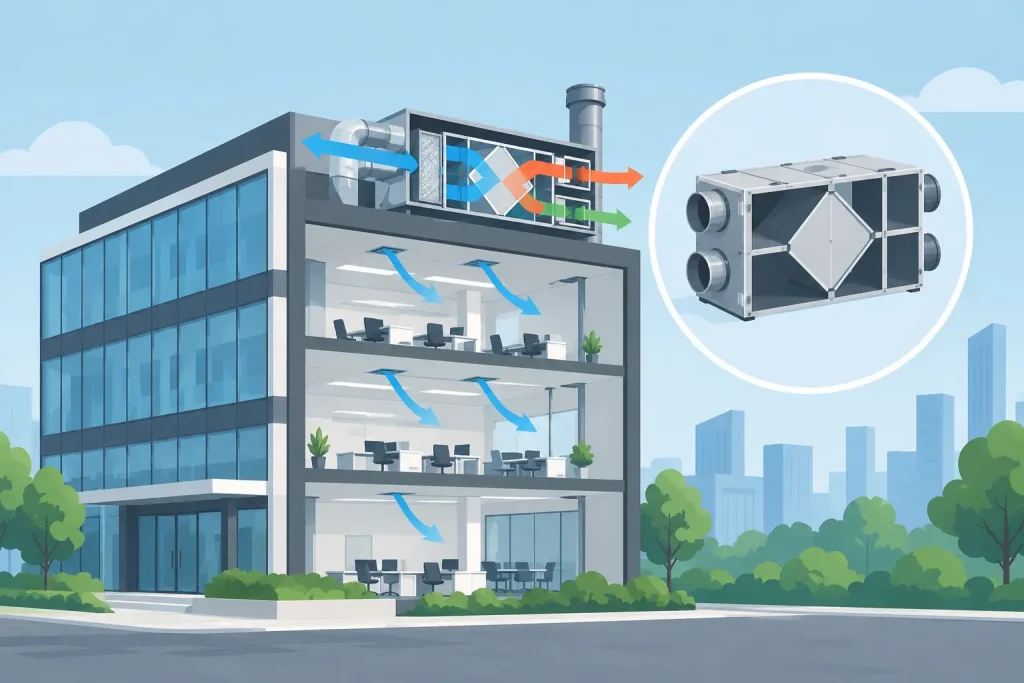
An MVHR unit extracts stale, humid air from areas such as kitchens, toilets and changing rooms. At the same time, it supplies filtered outdoor air to occupied spaces. The heat exchanger transfers heat from the outgoing air to the incoming air, reducing the energy needed to warm fresh air during cooler periods.
That principle is straightforward. Keeping it effective is less so. Filters gradually load with dust, fans can become noisy or inefficient, condensate drains can block, and changes to a building’s layout or occupancy can leave original airflow settings unsuitable. A review should therefore examine the complete system rather than treating the central unit as the only asset that matters.
A thorough inspection will normally consider the condition and fit of supply and extract filters; fan operation, bearings and electrical components; the heat exchanger and internal cleanliness; condensate drainage; controls, sensors and summer bypass operation; accessible ductwork and terminals; and the integrity of grilles, seals and access panels. Where performance concerns exist, airflow measurement and balancing are equally important.
The objective is to establish what the system is doing in practice, not what it was designed to do several years ago.
Airflow matters more than a running fan
A fan running does not prove that a space is receiving sufficient fresh air. Restricted filters, blocked terminals, duct leakage and poorly set fan speeds can all reduce effective ventilation. Conversely, excessive fan speed can create unnecessary noise and electricity use while making occupants uncomfortable.
Airflow checks allow an engineer to compare extract and supply volumes with the needs of the space. This is particularly relevant after a refurbishment, a change in room use or a rise in occupancy. A former small office converted into a busy meeting room, for example, may need a different ventilation approach even if the MVHR unit itself remains operational.
For commercial premises, poor balance can also create pressure issues between rooms. Unwanted air movement may draw odours from toilets or kitchens into adjacent areas, increase draught complaints or affect the performance of other environmental systems.
Heat recovery performance needs inspection, not assumption
The heat exchanger is central to an MVHR system’s efficiency. If it is dirty, damaged or incorrectly fitted after cleaning, heat transfer can fall and resistance through the unit can rise. The result may be higher fan energy use and less benefit from heat recovery.
A professional review checks that the exchanger is clean, accessible and correctly seated. It should also assess whether frost protection, bypass controls and temperature sensors are operating appropriately. These functions influence comfort and energy performance across changing weather conditions.
Not every concern requires replacement. In many cases, planned cleaning, filter management, drainage work or control adjustments can restore performance. Where components are approaching the end of their working life, identifying this early gives building managers time to plan expenditure rather than react to a failure.
When a commercial MVHR review is particularly worthwhile
A planned review is sensible for any building that relies on mechanical ventilation, but certain warning signs deserve prompt attention. Persistent odours, humidity, mould growth, condensation on internal surfaces, increasing noise, visible dirt around supply grilles and repeated occupant complaints should all be investigated.
Energy use is another useful indicator. An unexplained rise in electrical consumption may be linked to fans working against blocked filters or excessive system resistance. It will not always be the sole cause, but it is a practical reason to check the ventilation asset rather than accepting higher running costs as inevitable.
A review is also valuable before a lease handover, major refurbishment or reoccupation of a previously underused building. Periods of low use can mask underlying problems. Filters may be overdue for replacement, controls may have been altered, and changing occupancy patterns may mean the ventilation strategy no longer suits the premises.
For landlords and facilities teams responsible for several sites, a consistent inspection approach creates a clearer picture of asset condition across the portfolio. That makes it easier to prioritise remedial work, demonstrate responsible maintenance and forecast future costs.
Maintenance, compliance and documented evidence
Ventilation is part of a building’s wider duty to provide a safe and suitable environment for occupants. The exact requirements will depend on the premises, its use, occupancy and any applicable building standards or workplace obligations. However, the operational principle is clear: systems should be maintained so that they can perform their intended function.
A good MVHR review should produce more than a verbal assurance that the unit has been checked. Service records should confirm work completed, component condition, identified defects, recommendations and any measurements taken. This documentation helps facilities managers track recurring faults, manage contractors and demonstrate that planned maintenance is being taken seriously.
It also protects warranty position where manufacturers require evidence of regular servicing. Neglected filters or unauthorised alterations can compromise both performance and support arrangements, particularly where a system is part of a wider heating, cooling or building management installation.
There is a practical distinction between routine servicing and a deeper performance review. Routine servicing keeps the system clean and operational. A review looks more closely at whether ventilation levels, controls and balancing remain appropriate for the building. Many sites need both, at intervals based on use, environment and manufacturer guidance.
What building managers should expect from the findings
The most useful reports translate engineering observations into clear operational actions. Rather than receiving a list of component names with no context, decision-makers should be able to see what requires immediate attention, what can be planned and what should be monitored.
Priority defects may include failed fans, blocked condensate drainage, damaged filters, electrical faults or severely restricted airflow. These should be addressed quickly because they can affect ventilation provision, cause water damage or lead to further equipment failure.
Advisory work may include duct cleaning, replacement grilles, sensor calibration, control upgrades or rebalancing following changes to the layout. These actions are not always urgent, but they can improve comfort, reduce complaints and prevent avoidable energy waste.
A sensible maintenance plan will reflect the site rather than applying the same schedule everywhere. A small, lightly occupied office will have different demands from a restaurant, gym, care environment or busy retail unit. Dust levels, hours of operation, occupancy and the accessibility of equipment all affect the appropriate service frequency.
Choosing the right approach to MVHR maintenance
The cheapest visit is not always the lowest-cost option over the life of the system. A basic filter change can be suitable where the unit is known to be in good condition and operating within a planned maintenance programme. It is less suitable when there are complaints, unexplained energy costs or no reliable history of servicing.
For more complex commercial systems, appointing a contractor that can inspect, test, document findings and carry out remedial work avoids the gaps that often appear between separate suppliers. The benefit is accountability: one engineering partner understands the condition of the asset, the site risks and the actions needed to maintain performance.
Optim PRO supports Midlands businesses with planned ventilation and climate-control maintenance designed around system condition and operational priorities. The focus should always be on preventing disruption before it becomes an urgent call-out.
If your MVHR system has not been assessed since occupancy levels, room layouts or operating hours changed, arrange a review before comfort complaints and avoidable faults become part of normal business operations.