
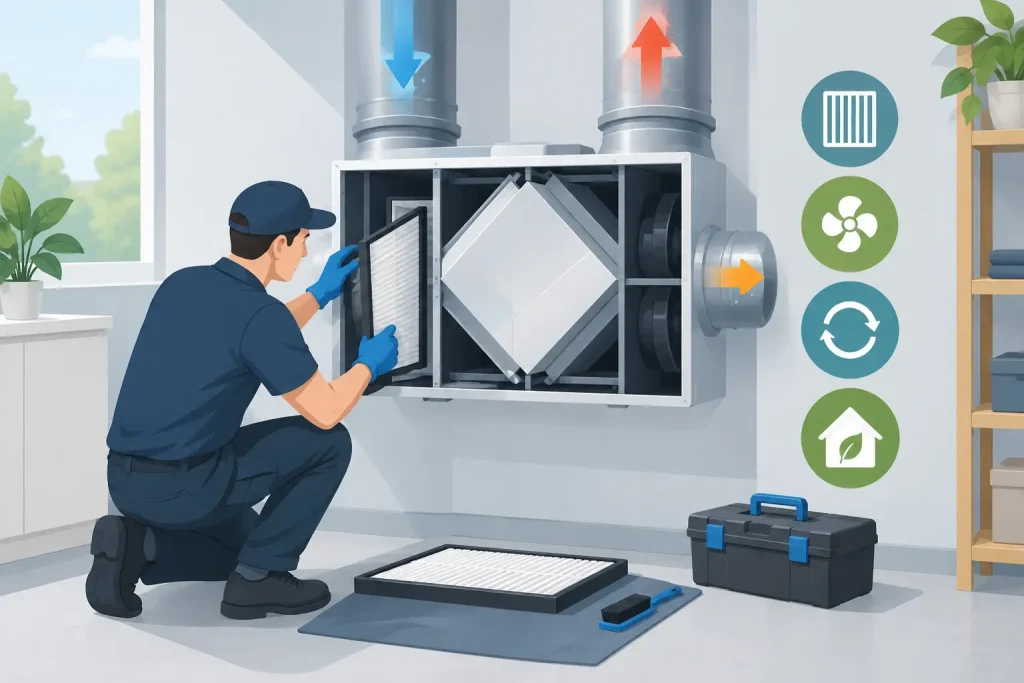
A heat recovery ventilation unit can appear to be working normally while gradually losing airflow, wasting energy and delivering poorer indoor air quality. Knowing how to maintain heat recovery ventilation is therefore less about waiting for a fault and more about following a documented routine that protects the asset, its occupants and day-to-day operations.
For commercial premises, HRV maintenance should sit within a planned ventilation and air conditioning programme. Filters, fans, condensate drainage, ductwork and controls all affect performance. A missed service can lead to higher fan energy use, complaints about stuffy rooms, moisture issues or avoidable component failure.
Why heat recovery ventilation maintenance matters
Heat recovery ventilation, often called HRV or MVHR, extracts stale air from areas such as washrooms, kitchens and occupied workspaces. It transfers heat from the outgoing airstream to incoming fresh air without mixing the two airflows. This reduces the heating demand needed to bring in outdoor air, particularly during colder months.
That efficiency depends on clear air paths and correctly operating components. As filters load with dust, the unit has to work harder to move the same volume of air. If fans are dirty or unbalanced, airflow can drop and noise can increase. A blocked condensate trap may cause water leakage, while poorly maintained ductwork can undermine the air quality benefits the system was installed to provide.
For facilities managers and building operators, the effect is operational as well as technical. Poor ventilation can lead to occupant complaints, reduced comfort and disruptions that require reactive attendance. A planned approach helps control costs, supports a healthier internal environment and creates a clear maintenance record for landlords, insurers, auditors and warranty providers.
How to maintain heat recovery ventilation on a planned basis
The right interval depends on occupancy, operating hours, local pollution levels, the type of building and the manufacturer’s instructions. A lightly used residential unit will not have the same maintenance needs as an HRV system serving a busy office, retail unit, care setting or hospitality venue. However, the following programme provides a practical baseline.
Check filters regularly and replace them before airflow suffers
Filters are the most routine HRV maintenance requirement. They capture dust, pollen and airborne particles before these enter the heat exchanger and supply ductwork. When filters become loaded, airflow falls and electrical consumption can rise as the fans compensate.
Inspect filters at least every three to six months, and more frequently where a site is near busy roads, industrial activity or construction work. Replacement is generally preferable to cleaning, unless the manufacturer specifically confirms that the filter type is washable. Vacuuming a disposable filter may remove surface dust but can damage its media and does not restore its designed performance.
Record the filter grade, date changed and any signs of unusual contamination. Heavy deposits of grease, black dust or moisture may point to a wider issue, such as unsuitable extraction arrangements, poor duct condition or an incorrectly located intake.
Keep supply and extract grilles clear
Walk the site and check that ceiling valves, wall grilles and external terminals are free from obstruction. Furniture, stock, ceiling alterations and decorating work can all restrict air movement. Supply and extract points should not be covered, blocked or adjusted casually by occupants trying to address a local draught.
Clean accessible grilles using a soft cloth or vacuum attachment. Avoid altering valve settings unless airflow commissioning data is available. These valves are usually set to deliver a balanced design airflow, and changing one point can affect performance elsewhere in the building.
External intake and discharge grilles also need attention. Leaves, litter, insect nests and surface dirt can restrict the system or introduce contaminants. Check them after storms and during autumn, when debris builds up quickly.
Inspect the heat exchanger, fans and internal surfaces
The heat exchanger is central to the unit’s energy performance. During a professional service, it should be removed and inspected in line with the manufacturer’s guidance. Some plate heat exchangers can be carefully cleaned, while others have more specific requirements. Using excessive water, aggressive chemicals or incorrect handling can damage the component.
Fans should be checked for dust build-up, vibration, bearing noise and secure mountings. Even a modest build-up on fan blades can reduce efficiency and affect balance. An engineer should also inspect electrical connections, fan controls and the condition of any anti-vibration measures.
The casing and internal seals deserve attention too. Damaged seals can allow unwanted air leakage or cross-contamination between supply and extract air paths. This is particularly relevant in commercial settings where ventilation design may support hygiene controls, staff welfare or specific operational processes.
Test condensate drainage and frost protection
Many heat recovery units produce condensate when warm, moist extract air cools within the system. The condensate tray, trap and drain line must be clear, correctly connected and protected against freezing where required. A blocked drain can cause internal leaks, corrosion, ceiling damage or a system shutdown.
During maintenance, check for standing water, staining and evidence of previous overflow. The trap should contain water where the unit design requires it, as a dry trap may allow air leakage or odours. Drain routes must maintain suitable falls and should not be crushed, disconnected or routed where they can freeze.
Frost protection should also be verified before winter. Depending on the system, this may involve a pre-heater, bypass arrangement, fan-speed control or a defrost cycle. If frost protection fails, the heat exchanger can ice up and restrict supply air when the building needs ventilation most.
Verify controls, sensors and airflow performance
A control panel that shows no fault code is not proof that an HRV system is delivering its intended ventilation rate. Timers, boost switches, humidity sensors, carbon dioxide sensors and building management system interfaces all need functional checks.
Confirm that normal and boost modes operate when expected. In washrooms, kitchens or meeting rooms, a failed boost function can leave moisture and odours lingering long after use. Conversely, a unit permanently locked in boost can increase noise and energy use.
A competent engineer should measure airflows at relevant terminals and compare them with commissioning information or the current operational requirement. This is especially valuable after refurbishments, occupancy changes or alterations to partitions and ceilings. If the system is out of balance, adjustment should be based on measured data, not guesswork.
Build maintenance around your building’s risk profile
A standard annual visit may be adequate for a small, low-occupancy office with clean surroundings and stable usage. It may not be sufficient for a restaurant, gym, education setting, busy retail site or a building with extended operating hours. Sites with sensitive equipment, high occupancy or strict indoor-environment requirements need closer oversight.
Your maintenance plan should account for filter-change frequency, access restrictions, critical operating periods and any need for out-of-hours work. Multi-site operators benefit from a consistent service standard, documented asset register and planned visit schedule, while still allowing for site-specific risks.
If the HRV equipment forms part of a wider air conditioning or ventilation system, coordinate maintenance activity. A dirty HRV filter, failed extract fan or poorly set control can affect heating and cooling demand across the building. Treating each item in isolation can hide the real cause of poor comfort or rising energy consumption.
Know when to call a qualified engineer
Routine visual checks can be handled by an appointed and trained site representative, but servicing internal components, electrical systems and airflow balancing should be completed by a competent ventilation engineer. This protects equipment, helps preserve warranty conditions and ensures that faults are properly diagnosed.
Arrange professional attention if you notice persistent condensation, water leaks, unfamiliar fan noise, weak airflow, repeated filter alarms, odours transferring between rooms or a material increase in energy use. These symptoms may be caused by more than a blocked filter. They can indicate failed fans, drainage faults, control issues, duct leakage or an incorrectly commissioned system.
For systems connected with wider refrigeration or air conditioning equipment, use appropriately certified specialists. Optim PRO supports Midlands businesses with planned maintenance programmes that combine practical servicing, clear reporting and action-led recommendations, helping teams plan remedial work before small defects become operational failures.
Keep records that support decisions
A maintenance log is not paperwork for its own sake. It gives facilities teams a useful record of filter changes, measured airflows, defects, parts fitted and recommended actions. Over time, it helps identify recurring issues, supports maintenance budgeting and demonstrates that the building operator has taken reasonable steps to maintain ventilation provision.
Keep commissioning records, operating manuals and previous service reports with the asset information. If a unit is replaced, upgraded or subject to warranty work, these documents can save time and reduce disputes over responsibility.
The most effective HRV maintenance programme is one that reflects how the building is actually used, rather than one based solely on a calendar date. Regular inspections, clean filters, verified airflow and clear service records give your ventilation system the best chance to protect comfort, air quality and energy performance year after year.