A meeting room that is too warm by mid-afternoon, a hotel bedroom with a noisy fan coil unit, or a cassette dripping onto a reception floor can all point to the same operational issue: the system is working harder than it should. Does HVAC maintenance reduce energy bills? Often, it can help, but the result depends on the equipment’s condition, how the building is used and whether maintenance addresses the whole installation rather than just changing or cleaning a filter.
For offices, hotels and managed commercial premises, planned preventative maintenance is primarily about keeping systems dependable and controllable. Improved efficiency is an important benefit, but it should be treated as part of a wider maintenance outcome: fewer avoidable faults, more consistent comfort, clearer records and better-informed decisions on repairs or replacement.
Does HVAC Maintenance Reduce Energy Bills in Commercial Buildings?
Air conditioning consumes more electricity when airflow is restricted, heat transfer is poor, controls are set incorrectly or components are beginning to fail. Routine maintenance can identify and correct these conditions before they become a persistent drain on performance.
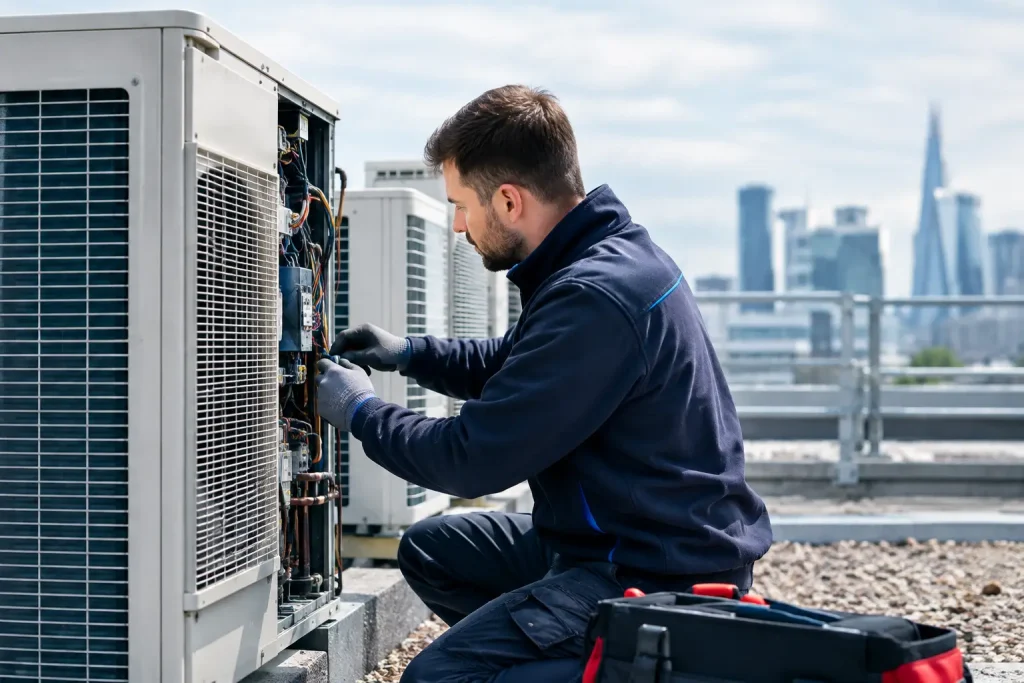
A blocked filter is the familiar example, but it is only one part of the picture. On a commercial split, multi-split or VRF/VRV system, an engineer also needs to consider the indoor and outdoor coils, fans, condensate drainage, refrigerant circuit indicators, electrical connections, controls and the physical condition of the units. For concealed ducted systems, access arrangements, return-air paths and duct-related airflow issues deserve particular attention.
When these elements are working as intended, the system should have a better chance of reaching the required temperature without prolonged running or unnecessary strain. That may reduce electricity consumption. It does not mean every maintenance visit produces a measurable or immediate drop in bills. A poorly insulated building, changing occupancy levels, extended operating hours and unusually hot weather can all outweigh the savings from servicing alone.
Where Energy Is Commonly Lost
Commercial air conditioning rarely becomes inefficient for one dramatic reason. More often, several small issues accumulate over time.
Filters and coils collect airborne dust and debris, reducing the volume of air moving through the unit and limiting heat transfer. The fan may then run for longer, room temperatures may become uneven and occupants may respond by changing set points. In an office, that can mean staff bringing portable heaters into areas that feel cold while neighbouring spaces are overcooled. In a hotel, it can mean avoidable guest complaints and rooms being taken out of use while an issue is investigated.
Controls also matter. A unit left on an unsuitable schedule, a sensor reading inaccurately or a controller with poorly coordinated settings can result in cooling during lightly occupied periods. Maintenance provides an opportunity to review whether the system is operating in line with the building’s actual hours and zone requirements.
Drainage faults are another common source of disruption. A partially blocked condensate drain may not directly create a large energy cost, but it can lead to water leaks, shutdowns and emergency call-outs. Addressing developing drainage issues during a planned visit is usually less disruptive than waiting for a ceiling leak in a meeting room or hotel corridor.
A Proper Service Looks Beyond the Filter
A superficial filter clean is not a maintenance strategy for a building with multiple units or a complex VRF/VRV installation. The service scope should reflect the equipment type, the condition of the system, the environment and the consequences of failure.
A useful planned maintenance visit assesses whether filters are accessible and serviceable, whether coils are clean enough to transfer heat effectively and whether fans are delivering suitable airflow. It should include a check of condensate drainage and pumps where fitted, together with an examination of visible electrical components, controls and operating performance.
For concealed ducted air conditioning, maintenance access is especially important. Filters, fan sections and drainage components are often above ceilings or behind access panels. If routine servicing requires extensive disruption to reach them, important checks may be missed or deferred. A maintenance assessment can identify where access needs improving, allowing future work to be completed more safely and consistently.
The aim is not to create a list of unnecessary remedial works. It is to distinguish between normal upkeep, developing defects that need planned attention and faults that require more urgent repair.
Planned Maintenance Versus Reactive Call-Outs
Reactive repairs have their place. Components do fail unexpectedly, and no maintenance programme can eliminate every breakdown. However, a site that only calls an engineer after occupants are uncomfortable or water is already leaking has little opportunity to control timing, budget or business disruption.
Planned preventative maintenance gives facilities teams a clearer view of asset condition. It can reveal recurring alarms, deteriorating fan motors, poor drainage, damaged insulation, inaccessible units or inconsistent controls before they become a major operational problem. This allows repair work to be prioritised around occupancy, meetings, guest bookings or quieter trading periods.
Consider a hypothetical hotel with several bedroom fan coil units reporting intermittent poor cooling. Replacing parts unit by unit after guest complaints may restore comfort in the short term, but a planned review could show a wider pattern involving dirty coils, drainage maintenance gaps or control settings. The right response depends on the findings. It may be a targeted repair programme, a revised PPM schedule or a longer-term replacement plan for the most unreliable equipment.
How to Judge Whether a PPM Proposal Is Sufficient
Maintenance proposals should be clear about the systems covered, the visit frequency and the checks included. A low-cost proposal that only covers a basic visual inspection may not provide meaningful protection for a building with ducted units, ceiling cassettes and multiple outdoor condensers.
Ask how the contractor will record unit condition and report defects. Clarify whether the engineer will assess filters, coils, airflow, drains, pumps, controls and maintenance access, rather than treating all units as identical. For larger sites, it is also sensible to discuss how the work can be organised around occupied areas and which faults should be reported immediately versus included in a planned remedial recommendation.
The right frequency is site-dependent. A lightly used office with a small number of well-maintained systems has different needs from a busy hotel where equipment runs across long hours and guest comfort is commercially critical. Systems in dusty environments, kitchens-adjacent areas or spaces with variable occupancy may require closer attention.
When Maintenance Cannot Solve the Whole Problem
Maintenance supports efficiency, but it cannot make unsuitable or end-of-life equipment perform like a modern, correctly designed system. If a unit is undersized, the layout has changed, refrigerant circuit faults recur or key parts are becoming difficult to obtain, continuing with routine servicing alone may not be proportionate.
A competent engineer should explain the evidence before recommending replacement. This might include repeated breakdown history, inconsistent performance, significant repair requirements, access constraints or an equipment condition that makes future costs difficult to predict. In some cases, a focused repair and better maintenance plan is the sensible option. In others, phased replacement may offer better control of disruption and capital expenditure.
For commercial property managers, that distinction matters. Maintenance records create a stronger basis for budgeting because they show what has been checked, what has been repaired and which assets are beginning to present a risk to comfort or reliability.
Turning Maintenance Into Better Cost Control
The practical value of HVAC maintenance is not limited to a lower electricity line on the next bill. It is the ability to run equipment with fewer avoidable restrictions, identify faults before they interrupt the building and make spending decisions with a clearer understanding of asset condition.
OptimPRO provides planned air conditioning maintenance across the Midlands for offices, hotels and other commercial premises, including ducted systems, cassettes, split systems and VRF/VRV installations. If maintenance has become reactive or service history is unclear, discuss the building’s systems and request a tailored PPM proposal that reflects how the premises actually operates.