

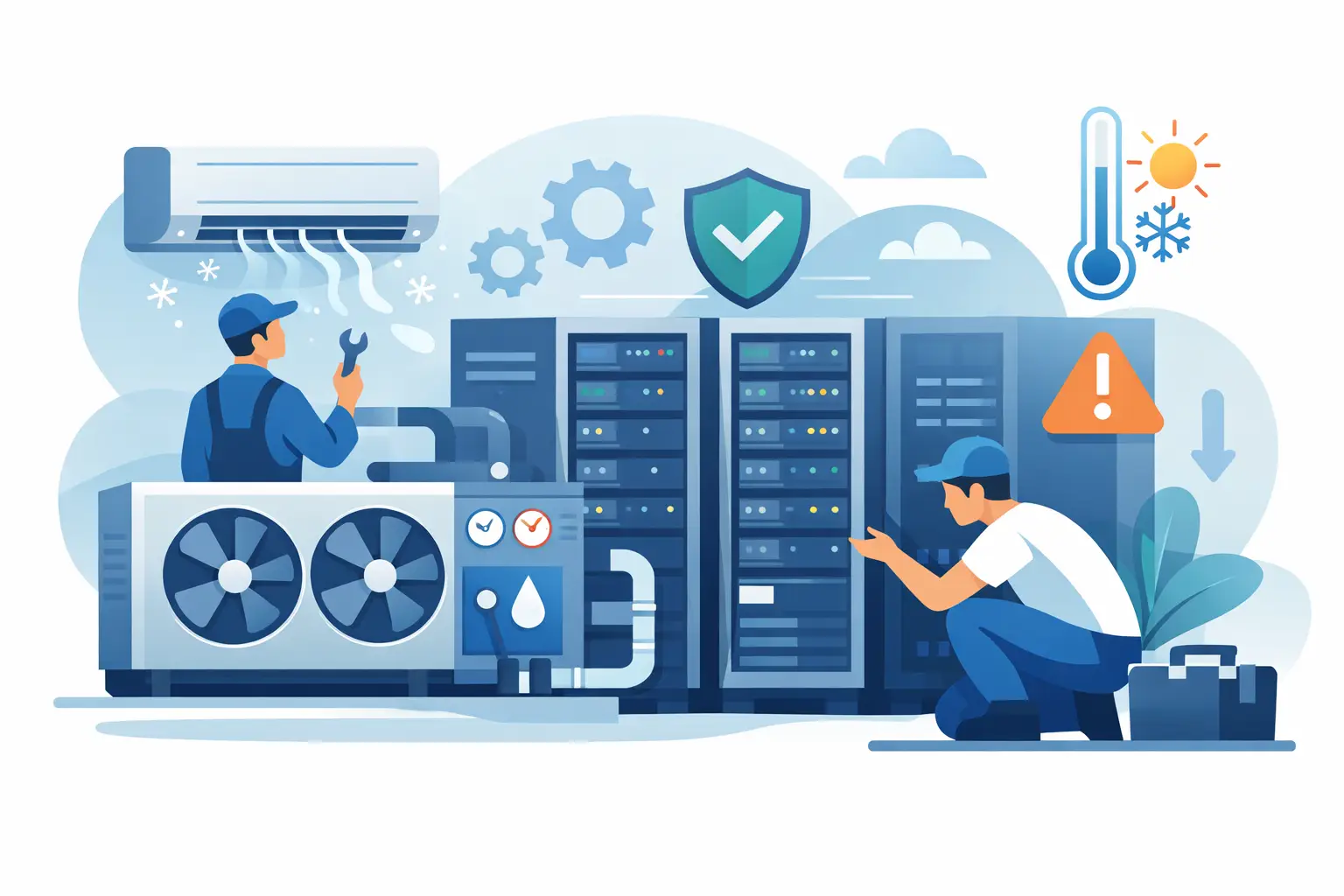
Data Centre Cooling Maintenance That Prevents Downtime
A server room rarely gives you much warning. One blocked coil, one drifting sensor or one missed service interval can push temperatures up fast, and once heat starts building, the operational risk is immediate. That is why data centre cooling maintenance is not a box-ticking exercise. It is a core part of protecting uptime, controlling energy use and avoiding preventable failures in critical environments.
For facilities managers, operations teams and building owners, the issue is not simply whether cooling is running today. It is whether the system can hold stable conditions under load, respond properly to changing demand and continue meeting compliance and warranty obligations over time. In a data centre or comms room, the cost of getting that wrong is usually far greater than the cost of planned maintenance.
Why data centre cooling maintenance matters
Cooling plant in critical spaces works harder than comfort cooling in offices, retail units or meeting rooms. Loads are more concentrated, tolerance for drift is lower and equipment often runs continuously. That changes the maintenance conversation.
A minor issue in a standard commercial building might cause discomfort. In a data environment, the same issue can reduce equipment reliability, increase the chance of alarms, shorten asset life and create an urgent call-out at the worst possible time. Heat, airflow imbalance and humidity instability do not stay small for long when systems are under constant demand.
There is also a financial angle that is often missed. Poorly maintained cooling systems consume more energy, cycle less efficiently and place more strain on compressors, fans and controls. That means higher operating costs before a failure even happens. Planned servicing helps identify where a system is working harder than it should, so corrective action can be taken before efficiency drops further.
What effective maintenance actually covers
Good data centre cooling maintenance goes beyond a basic visual check. It should look at system condition, operational performance and compliance status together, because all three affect business continuity.
On the mechanical side, service work typically includes inspection and cleaning of coils, filters, condensers, evaporators and drainage components. Refrigerant circuits need to be checked for signs of leakage, pressure issues and inefficient operation. Electrical components, terminals, contactors and fan motors also need routine inspection because a cooling failure is not always caused by the refrigeration side alone.
Controls matter just as much. Sensors, thermostats and building management system interfaces need to be tested for accuracy. If temperature or humidity readings are drifting, the plant may be reacting to false conditions. That can lead to short cycling, uneven cooling or wasted energy, even when the equipment appears to be running normally.
Airflow should not be overlooked. In many server environments, the problem is not lack of cooling capacity on paper but poor air distribution in practice. Obstructions, dirty filters, fan degradation or changes in rack layout can all alter how effectively cold air reaches critical equipment. Maintenance should therefore be tied to how the room is actually being used, not just the specification the system was originally installed to meet.
The balance between uptime and intervention
Critical environments create a practical challenge. The more important the room, the harder it can feel to take systems offline for proper servicing. Yet postponing maintenance usually increases the chance of an unplanned outage later.
This is where planning matters. In well-managed sites, maintenance is scheduled around operational windows, redundancy arrangements and load conditions. If there is N+1 resilience or staged cooling capacity, works can often be organised with minimal disruption. If there is no redundancy, the maintenance approach needs to be even more controlled, with clear risk assessment and step-by-step checks.
It depends on the age of the plant, the design of the room and how close the system already operates to its limits. A lightly loaded comms room may tolerate more flexibility. A high-density data space with little spare capacity may need tighter inspection intervals and more detailed performance monitoring. One servicing schedule does not suit every site.
Common faults maintenance is designed to catch
Many failures that lead to emergency call-outs start as small, detectable issues. Dirty condensers reduce heat rejection and force compressors to work harder. Blocked drains can create water risk and trigger shutdowns. Worn belts, failing fan motors or deteriorating bearings can reduce airflow before anyone notices a temperature problem.
Refrigerant loss is another concern, not only because it affects cooling performance but because it can have compliance implications. Systems using fluorinated gases must be managed properly, with leak checks and record keeping where required. Ignoring that side of maintenance can create legal exposure as well as operational risk.
Electrical faults are equally important. Loose connections, component wear and control board issues may not stop a system immediately, but they often show early warning signs during inspection and testing. Catching them at service stage is far cheaper and less disruptive than waiting for a breakdown.
Data centre cooling maintenance and compliance
In commercial and critical environments, maintenance is not just about keeping equipment running. It also supports compliance, service records and warranty protection.
Manufacturer warranties often depend on evidence of regular servicing by qualified engineers. If maintenance has been missed or poorly documented, a warranty claim may be challenged when a major component fails. That can turn an avoidable oversight into a significant cost.
There are also regulatory responsibilities around refrigerant handling and F-Gas management. For organisations running multiple sites, consistent service documentation matters because it helps prove equipment has been maintained correctly and gives facilities teams a clearer view of asset condition across the estate.
This is one reason many businesses prefer a structured maintenance partner rather than a reactive-only arrangement. When records, service intervals and remedial actions are managed properly, budgeting becomes easier and compliance risk is reduced.
How maintenance affects energy performance
Energy efficiency is often treated as a separate project, but in practice it starts with maintenance. A cooling system that is dirty, poorly calibrated or struggling with airflow restrictions will draw more power for the same result.
In data environments, that inefficiency adds up quickly because systems operate for long hours and often all year round. Even small declines in performance can have a meaningful effect on running costs. Cleaning heat exchange surfaces, checking refrigerant charge, verifying fan operation and recalibrating controls can all improve efficiency without any major capital works.
That said, maintenance is not a substitute for plant upgrades where equipment is genuinely outdated or undersized. If a system is near the end of its service life, maintenance may keep it stable in the short term but cannot remove the underlying risk. The right approach is usually to use maintenance data to inform replacement planning rather than waiting for failure to force the decision.
Choosing the right service approach
A basic annual visit is rarely enough for a critical cooling application. The right frequency depends on operating hours, room load, redundancy, equipment age and the consequences of failure.
For some sites, quarterly servicing is appropriate. Others may need more frequent inspections, seasonal performance checks or a maintenance plan tied to business continuity requirements. The important point is that the schedule should reflect the risk profile of the environment, not just a generic contract template.
Service delivery also matters. Engineers working in data centres need to understand that the goal is not simply technical completion of a checklist. It is protecting operational continuity. That means clear communication, controlled working methods, proper documentation and practical recommendations that help decision-makers prioritise spend.
For Midlands businesses managing server rooms, comms spaces or larger critical cooling systems, working with a specialist partner such as Optim PRO can make that process more predictable. The value is not only in fixing faults when they appear, but in building a maintenance plan that reduces the chance of those faults appearing in the first place.
When to review your current maintenance regime
If your cooling plant is only seen when there is a problem, the regime is probably too reactive. The same is true if service records are difficult to find, alarms are becoming more frequent or energy use is rising without a clear reason.
Other warning signs include uneven temperatures, longer run times, repeated call-outs for similar faults and uncertainty about warranty or F-Gas responsibilities. None of these automatically mean a system is close to failure, but they do suggest maintenance is not giving you the control it should.
A well-run data centre does not leave cooling performance to chance. It treats maintenance as part of resilience planning, cost control and asset protection. The most effective time to tighten that approach is before the next high-temperature alarm, not after it.