
Commercial AC Maintenance That Cuts Downtime
When an office floor overheats at 10am, a retail unit loses cooling on a Saturday, or a server room starts drifting outside safe temperature range, the issue is rarely just comfort. It becomes a business continuity problem. That is why commercial AC maintenance matters – not as a box-ticking exercise, but as a practical way to protect uptime, control running costs and avoid preventable failure.
For most commercial sites, air conditioning sits in the background until it stops doing its job. By that point, energy waste has often been building for months. Filters may be restricted, coils fouled, refrigerant charge affected, condensate drainage compromised, or controls operating outside intended parameters. None of those issues usually start as an emergency. They become one when maintenance is delayed.
What commercial AC maintenance actually covers
Good maintenance is more than a quick visual check and a service sticker. In a commercial setting, it should combine system inspection, performance testing, cleaning, safety checks and service documentation. The aim is to keep equipment operating as designed while identifying wear, inefficiency and compliance issues before they turn into disruption.
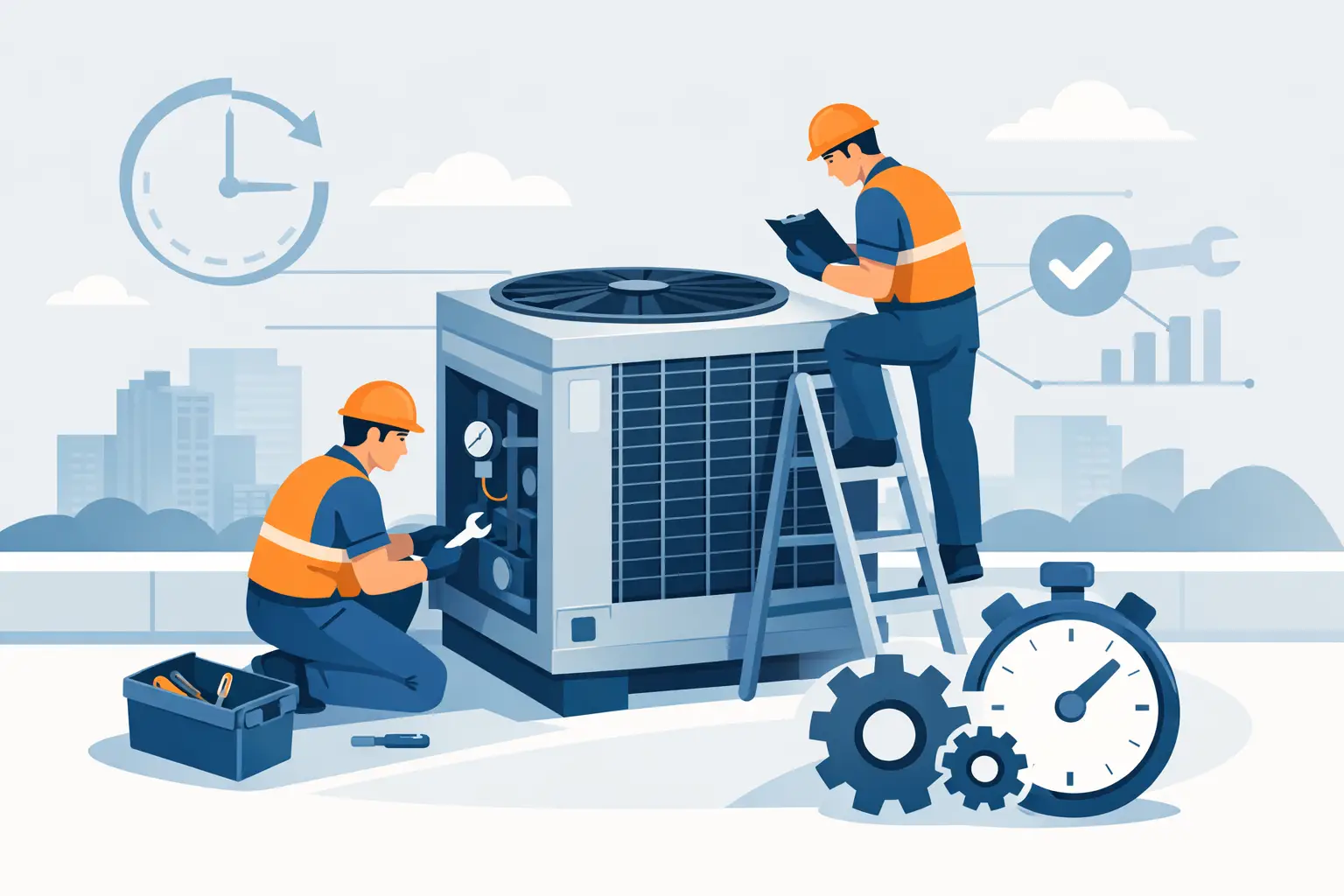
On a typical visit, engineers will assess filters, evaporator and condenser coils, fan motors, electrical connections, controls, drain lines, pipework insulation and general system condition. They should also review operating pressures and temperatures where appropriate, check for signs of refrigerant issues, and confirm that units are starting, running and shutting down correctly.
The right scope depends on the building and the risk profile. A small office with light daily use does not need the same servicing regime as a restaurant, a busy retailer or a data-led environment with critical cooling loads. That is where planned maintenance becomes valuable. It matches service frequency and depth to how the system is actually used.
Why planned commercial AC maintenance pays for itself
Reactive repair always sounds cheaper until the first serious failure. Then the costs arrive all at once: call-out charges, parts, potential hire equipment, staff disruption, tenant complaints, lost trade and unplanned downtime. In some settings, a single outage can cost more than a year of scheduled servicing.
Planned commercial AC maintenance spreads cost more predictably and usually reduces total spend over the life of the equipment. Clean heat exchangers improve efficiency. Correct airflow reduces strain on compressors and fans. Early detection allows smaller parts to be replaced before larger assemblies are damaged. It also gives site teams more control over scheduling, which matters when access windows are limited.
There is also the energy question. Air conditioning that is dirty, underperforming or poorly adjusted tends to consume more electricity for less output. On sites with multiple indoor and outdoor units, that hidden inefficiency can materially affect operating costs. Maintenance will not make an old system new, but it often restores lost performance and reduces avoidable consumption.
Compliance, records and warranty protection
Commercial buyers are not only managing plant performance. They are also managing duty of care, contractor accountability and the paper trail that supports both. Maintenance plays a direct role here.
Where refrigerants are involved, service activity may need to align with F-Gas requirements depending on system type and charge. Equipment also needs to be maintained in a condition that is safe to operate. For landlords, facilities teams and multi-site operators, documented servicing helps demonstrate that systems have been professionally inspected and managed.
Manufacturer warranties are another factor that gets overlooked until a claim is challenged. Many warranties require routine servicing by competent, certified engineers. If maintenance intervals are missed or records are incomplete, support can become more difficult at the point you need it most. A structured service programme helps protect that position.
Signs your maintenance regime is not doing enough
Some systems are technically being serviced but still under-maintained in practical terms. If your site is seeing repeated breakdowns, uneven temperatures, rising energy bills, persistent odours or water leaks, the issue may not be the equipment alone. It may be that the current maintenance scope is too light, too infrequent or too generic for the environment.
Another warning sign is poor visibility. If you do not receive clear service reports, logged recommendations or records of compliance-related checks, it becomes harder to budget, prioritise remedial work or explain asset condition internally. Commercial maintenance should give decision-makers useful information, not just attendance confirmation.
How service frequency should be decided
There is no single schedule that suits every building. Frequency should reflect usage hours, occupancy, environmental conditions and the consequence of failure. A lightly used comfort cooling system in a meeting room may only need modest attention. A retail shop with doors opening throughout the day, grease exposure from nearby catering, or high occupancy swings will usually need more frequent visits.
Critical spaces require a different standard again. If cooling supports IT rooms, communications equipment, stock preservation or operational continuity, maintenance should be built around risk reduction, not minimum compliance. In those settings, the cost of failure is too high to rely on the lightest possible plan.
Seasonality matters as well. Systems should be checked before peak summer demand rather than after problems start appearing. If a site also uses reversible heat pump systems for winter heating, the maintenance plan needs to support year-round operation.
Choosing the right commercial AC maintenance partner
Price matters, but it should not be the only measure. Commercial clients need a contractor who understands the operational side of maintenance: site access, documentation, statutory awareness, response times and the commercial impact of downtime. Engineering competence is essential, but so is the ability to manage service delivery properly.
Look for clear maintenance scopes, certified engineers, transparent reporting and recommendations that are prioritised in business terms. It helps if your contractor can support both planned servicing and urgent repairs, because faults do not wait for contract boundaries. For organisations with multiple premises, consistency across sites is equally important.
In the Midlands, many businesses want one partner who can take ownership of maintenance, compliance support and repair response without creating extra administration. That joined-up approach tends to deliver better outcomes than fragmented support from several providers. It is one reason businesses work with specialists such as Optim PRO when they want maintenance tied closely to uptime, legal confidence and asset protection.
What a well-run maintenance plan should deliver
The best maintenance plans are not defined by how many visits appear on paper. They are defined by outcomes. You should see fewer reactive call-outs, better temperature stability, cleaner operation, clearer budgeting and a stronger record of compliance support. Over time, you should also get a better understanding of which assets are worth repairing and which are becoming uneconomical to keep in service.
That final point matters. Maintenance is not about keeping every ageing unit alive indefinitely. Sometimes the right recommendation is targeted replacement, especially where parts are becoming unreliable, efficiency has dropped sharply or repeated repair costs are overtaking asset value. A dependable contractor will say that plainly and support a sensible decision, rather than prolonging a failing system for another short-term invoice.
Commercial AC maintenance is a business decision
Facilities managers and operators are often judged on what does not happen: no avoidable shutdown, no uncomfortable workspace, no failed audit trail, no surprise repair bill in peak season. Air conditioning maintenance supports exactly those outcomes. It protects the environment your staff, customers and equipment depend on.
If your current approach is reactive, inconsistent or built around the cheapest available visit, the short-term saving may be costing more than it appears. A maintenance plan that fits the building, the load and the operational risk usually delivers better value over time. The practical question is not whether servicing costs money. It is whether unmanaged failure will cost more when your site can least afford it.