
Residential Air Conditioning Servicing That Works
A wall-mounted unit that still blows air is not necessarily working efficiently. If it takes longer to cool a bedroom, smells damp when it starts, leaks water or makes more noise than usual, the system is already signalling that attention is needed. Residential air conditioning servicing addresses these early issues before they become a failed component, lost comfort or an avoidable repair bill.
For homeowners, landlords and operators of managed residential properties across the Midlands, servicing is practical asset protection. A correctly maintained system uses less energy, provides cleaner conditioned air and is more likely to deliver the reliable heating and cooling performance it was installed for.
What residential air conditioning servicing should achieve
A professional service is not simply a quick clean of the front panel. It is a structured inspection of the indoor and outdoor equipment, the refrigerant circuit, controls, condensate drainage and electrical connections. The aim is to identify conditions that reduce performance or could lead to failure.
Most residential systems are split air conditioning units, with an indoor fan coil linked to an outdoor condenser. They are compact and efficient, but their performance depends on unrestricted airflow, clean heat-exchange surfaces and correctly operating controls. A blocked filter or dirty coil can force the system to run harder for the same result. Over time, that means higher electricity use and more strain on key components.
Servicing also supports the comfort people actually notice. A unit may reach the set temperature eventually, yet distribute air poorly, cycle too often or struggle during the hottest week of the year. Checking performance under operation gives a clearer picture than judging the system by whether it switches on.
The difference between cleaning and servicing
Homeowners can and should keep accessible filters clean in line with the manufacturer’s instructions. This is basic housekeeping and can make an immediate difference to airflow. It does not replace a service visit.
An engineer can inspect areas that are not suitable for untrained access, including electrical terminals, fan operation, coil condition, pipework insulation, drainage arrangements and refrigerant-related performance. Work involving refrigerant must be carried out by appropriately F-Gas certified personnel. Attempting a repair, recharge or refrigerant check without the right competence can create a safety issue and put warranty protection at risk.
What happens during a professional service visit
The exact scope should match the make, model, age and use of the system. A lightly used bedroom unit needs a different servicing programme from a system that runs daily in a large open-plan home, rental property or home office. However, a thorough visit will normally include the following checks.
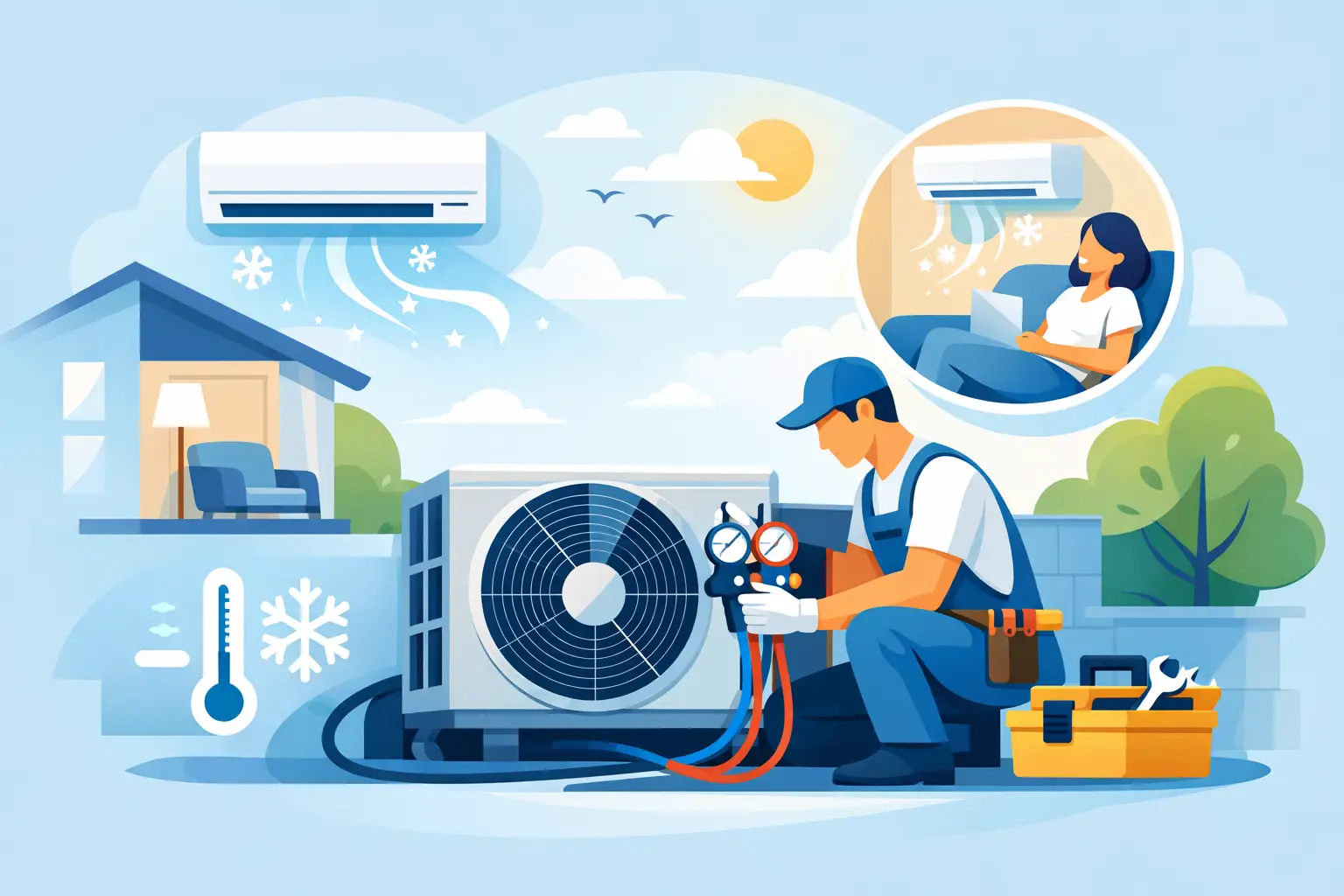
The engineer will clean or assess the filters and indoor unit, inspect the evaporator coil, and check that the fan runs correctly without excessive vibration or noise. The condensate tray and drain are examined to reduce the risk of water leaks, staining and mould-related odours. Where drainage is partially blocked, it is better to deal with it before water reaches the wall, ceiling or flooring.
Outside, the condenser requires clear airflow to reject heat effectively. Leaves, dust, garden debris and restricted positioning can all undermine efficiency. The engineer will inspect the coil, fan, casing and pipework, while also checking for damage, corrosion or signs of leakage.
Electrical and control checks are equally important. Loose connections, worn isolators or unreliable sensors can cause intermittent faults that are difficult for a homeowner to diagnose. The system should be tested in the relevant operating mode, with observations recorded and any recommended remedial work explained in plain terms.
Good servicing produces more than a clean unit. It gives you a record of the system’s condition, work completed and any actions required. That documentation is useful for planned budgeting, property management and manufacturer warranty requirements.
How often should a home system be serviced?
For most residential air conditioning systems, an annual service is a sensible baseline. It allows the unit to be cleaned, tested and reviewed before small faults develop into a more expensive call-out. Booking before the main cooling season is often practical, particularly where a unit also provides heating through the winter.
There are situations where more frequent attention is justified. A system serving a busy home office, gym, kitchen area or short-let property can accumulate dirt and run for longer periods. Homes with pets, smokers, high dust levels or occupants sensitive to allergens may also benefit from more regular filter and indoor-unit care.
Usage matters more than the calendar alone. A unit used only during occasional summer heat may have different needs from an air-to-air heat pump used for heating and cooling throughout the year. An engineer can recommend a proportionate programme rather than selling unnecessary visits.
The cost of delaying service
The most expensive air conditioning fault is often the one that had warning signs months earlier. Reduced airflow, inconsistent temperatures and unusual sounds are easy to ignore when the unit still works. But they can point to a blocked drain, fouled coil, fan issue or control fault that will not improve through continued use.
Delaying maintenance can create three avoidable costs. First, the system may consume more electricity because it has to work harder. Secondly, a minor defect can affect connected components, increasing the scale of repair. Finally, breakdowns tend to happen when demand is highest, leaving rooms uncomfortable at precisely the time reliable cooling or heating matters most.
For landlords, there is an additional operational consideration. A failed system can result in tenant complaints, emergency access arrangements and disruption between tenancies. Planned servicing gives a clearer maintenance record and helps reduce reactive work, although it cannot eliminate every unexpected fault.
Signs your air conditioner needs attention sooner
Do not wait for the next routine appointment if performance changes suddenly. Arrange an inspection if you notice:
- water dripping from the indoor unit or staining around it;
- a musty, burning or unusually strong smell when the system operates;
- weak airflow, poor cooling or heating, or frequent short cycling;
- new rattling, buzzing or grinding noises; or
- ice on pipework, visible damage or a unit that trips the electrical supply.
Switch the system off if there is a burning smell, significant water leak or electrical concern. Continued operation may increase damage. A qualified engineer can establish whether the problem is straightforward maintenance, a component repair or an issue requiring further investigation.
Protecting efficiency between service visits
There is useful work a homeowner can do without interfering with technical parts of the system. Keep furniture and curtains away from indoor air outlets, and avoid stacking stored items around the outdoor unit. Check accessible filters regularly and clean them only as the manufacturer directs. During dry weather, remove loose leaves and debris from around the condenser without bending fins or spraying electrical areas.
Use sensible temperature settings too. Setting an extreme target temperature does not make a system cool a room faster; it can simply make it run longer. A moderate, stable setting is generally more comfortable and economical. If a room is gaining excessive heat through open windows, poor shading or sun-facing glazing, address those factors alongside air conditioning use.
The system’s controls can also influence running costs. Timers and schedules are valuable when they match real occupancy, but a poorly set programme can cool empty rooms or leave the system working against open doors and windows. This is particularly relevant in larger homes and landlord-managed properties where usage patterns change.
Choosing the right service partner
The cheapest visit is not always the lowest-cost option over the life of the system. Ask whether the provider is appropriately certified for refrigerant work, whether the service includes operational testing rather than surface cleaning alone, and whether findings will be documented clearly. You should also know what is included in the quoted visit and what would be treated as additional repair work.
For systems under manufacturer warranty, follow the maintenance conditions supplied with the equipment. Many warranties require evidence of professional servicing, and neglect may complicate a claim. Older units may need a more considered approach: if recurring repairs are becoming frequent, an engineer should explain the likely cost and expected benefit of repair against replacement rather than defaulting to either option.
Optim PRO approaches residential systems with the same planned-maintenance discipline used for critical commercial assets: assess the condition, address the risk and provide a clear recommendation. That approach helps homeowners make decisions based on performance, cost and the remaining life of the equipment.
A well-maintained air conditioner should be easy to forget about because it delivers quiet, dependable comfort when required. Book servicing before performance falls away, keep a record of the work completed, and act promptly when the system starts behaving differently.