
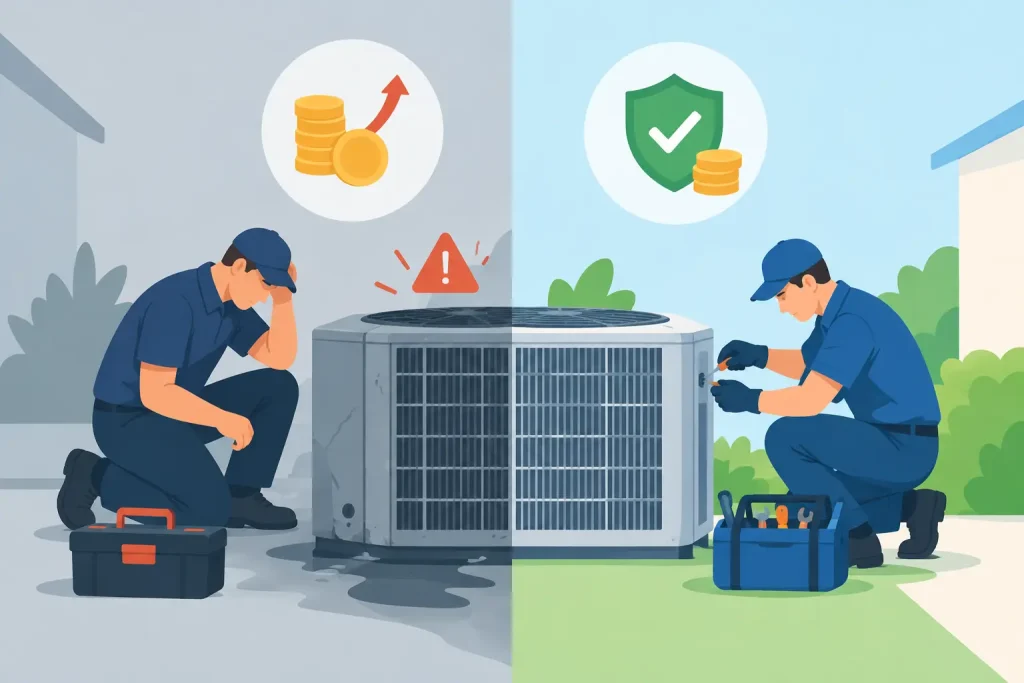
A failed air conditioning unit rarely arrives at a convenient time. It happens during a busy trading period, in the middle of a heatwave, before an important client visit, or when a server room is already operating close to its temperature limit. The practical choice between reactive versus proactive HVAC servicing determines whether that failure becomes a manageable repair or an expensive operational disruption.
For commercial properties, HVAC is not simply a comfort system. It supports staff productivity, customer experience, stock protection, indoor air quality and, in some settings, business-critical operations. The right servicing approach should therefore be assessed against downtime risk, running costs, compliance obligations and the expected life of the equipment.
What reactive HVAC servicing involves
Reactive servicing means calling an engineer once a fault has developed. It may be prompted by poor cooling or heating, unusual noise, a water leak, an alarm code, reduced airflow or complete system failure. The engineer diagnoses the issue, identifies any required parts and carries out the repair where possible.
There is a place for reactive work. A sudden electrical fault, accidental damage or an unexpected component failure cannot always be prevented. Businesses also sometimes choose a repair-only approach for older, low-value equipment nearing replacement, where the cost of a full maintenance programme may not be justified.
The limitation is that faults are usually addressed after they have already affected performance. A blocked condensate drain becomes a leak. A dirty filter restricts airflow and places strain on the fan. A small refrigerant leak reduces cooling capacity before potentially becoming a larger repair and a compliance concern. By the time symptoms are visible, the system may have been operating inefficiently for weeks or months.
Reactive repairs can also be harder to budget for. The initial call-out is only one part of the cost. There may be emergency attendance, diagnostic time, replacement components, refrigerant recovery or recharge, access equipment, temporary cooling measures and lost trading or productivity. If a specialist part is needed, the business may also face a period without normal climate control.
How proactive HVAC servicing protects operations
Proactive servicing, often delivered through planned preventive maintenance, is structured around regular inspections and maintenance visits. The purpose is to identify developing issues before they interrupt the building or damage major components.
A suitable visit will typically assess system operation, clean and inspect key components, check filters and drainage, examine electrical connections, verify controls, review airflow and look for signs of refrigerant loss or wear. The exact work depends on the equipment, its age, how intensively it is used and the environment it serves.
For a retail unit, this might mean preventing an uncomfortable shop floor during peak summer trading. In an office, it can help maintain a stable working environment and avoid complaints that distract facilities teams. In a restaurant, hotel or gym, dependable temperature control is closely linked to the customer experience. For data rooms, healthcare settings and production spaces, the consequences of lost cooling can be considerably more serious.
Proactive maintenance does not guarantee that a system will never fail. No engineer can remove every risk from ageing equipment or an electrical supply issue. What it does provide is earlier visibility. A business can plan a repair, order parts before a critical failure, schedule work outside occupied hours and make informed decisions about repair versus replacement.
Reactive versus proactive HVAC servicing: the cost difference
The lowest invoice is not always the lowest operating cost. Reactive servicing can appear cheaper when a system is running without obvious problems because there is no regular contract fee. That calculation changes quickly when a neglected issue develops into a compressor failure, a major leak or a period of unplanned closure.
Proactive servicing spreads maintenance expenditure across the year and makes costs more predictable. It can also improve energy performance. Dirty coils, obstructed filters, poorly functioning fans and incorrect controls force systems to work harder to achieve the same internal conditions. That increases electricity use and accelerates wear.
The financial case is strongest where systems run for long hours, serve customer-facing areas or protect sensitive operations. A multi-site operator may also benefit from a consistent maintenance standard, centralised records and a clearer picture of which assets are becoming costly to maintain.
That said, servicing plans should be proportionate. A small office with a lightly used split system does not need the same visit frequency or level of reporting as a 24-hour site with multiple VRF systems, ventilation plant and critical cooling. The best programme is based on risk and asset condition, not a one-size-fits-all schedule.
Compliance is not an emergency task
For businesses operating equipment containing fluorinated greenhouse gases, F-Gas obligations are a central consideration. Leak checks, where required by the equipment’s refrigerant charge and CO2 equivalent, must be completed at the appropriate intervals by suitably certified personnel. Records must also be retained.
Waiting until a system has lost cooling is not a reliable compliance strategy. A refrigerant issue may be gradual, and the operational impact often appears before the underlying cause is fully understood. Planned servicing gives businesses a clearer record of inspections, repairs, refrigerant handling and recommendations.
Compliance documentation matters for more than an audit. It provides evidence that the business is managing its equipment responsibly and helps facilities teams maintain continuity when staff change or sites are acquired. It can also support insurance, landlord responsibilities and internal environmental reporting.
Manufacturer warranty conditions deserve the same attention. Many manufacturers expect equipment to be installed, serviced and repaired in line with their requirements. Skipping routine maintenance may make it harder to support a warranty claim when a significant component fails. Keeping accurate service records protects both the asset and the business case for investment.
The operational risks of waiting for a fault
A reactive approach tends to create pressure at the worst possible moment. Facilities managers must source urgent support, explain the disruption to colleagues or customers, authorise unplanned costs and manage a repair timetable that may depend on parts availability.
There is also a wider effect on the building. Inadequate cooling can lead to uncomfortable staff, reduced concentration and customer dissatisfaction. Poorly maintained ventilation can affect perceived air quality. Excess condensate can damage ceilings, finishes, electrical equipment or stock. A fault that begins in one indoor unit can become a wider concern where systems share outdoor equipment or controls.
Older systems warrant particularly close attention. As equipment approaches the later stages of its life, a proactive programme can highlight repeated faults, declining efficiency and component obsolescence. This enables a planned replacement decision rather than a rushed purchase after a total breakdown. Planned replacement is usually easier to schedule, specify and budget for, with less disruption to the premises.
Choosing the right service model for your site
The decision is not simply between a maintenance contract and no maintenance contract. It is about setting a service level that reflects the consequences of failure.
A business should consider how many people or processes depend on the system, whether the site trades during hot or cold periods, how quickly an engineer needs to attend, and whether a failure could affect stock, IT equipment, safety or contractual obligations. It should also review the equipment’s age, service history, refrigerant type and warranty status.
A well-managed service programme should provide clear visit schedules, records of completed work, practical recommendations and a route for urgent support when unexpected faults occur. It should distinguish between essential housekeeping tasks and longer-term asset advice, so decision-makers can see what needs immediate action and what can be budgeted for later.
For Midlands businesses, local engineering coverage also matters. A provider that understands the site, holds accurate equipment records and has a planned relationship with the client can respond with more context than a contractor attending for the first time during an emergency.
A planned approach gives you better choices
Reactive repairs will always be part of HVAC ownership. Components fail, building use changes and external events happen. The aim is not to eliminate every call-out, but to reduce avoidable failures and make unavoidable ones less disruptive.
A planned servicing programme gives building operators time: time to act on early warnings, time to budget for repairs, time to arrange access and time to replace ageing equipment on their terms. Optim PRO can assess the condition, usage and risk profile of your HVAC equipment and recommend a service approach that supports compliance, uptime and long-term value.
The most useful question is not whether maintenance costs money. It is whether your business would rather make decisions before a fault affects the building, or after it has already done so.