
PPM Maintenance vs Reactive Repairs
A comfort cooling failure at 2pm on a warm weekday rarely stays a simple maintenance issue. It quickly becomes a business issue – staff productivity drops, customers notice, stock may be affected, and someone has to authorise an urgent call-out at short notice. That is why ppm maintenance vs reactive repairs is not just an engineering discussion. For most commercial buildings, it is a decision about uptime, cost control, compliance and risk.
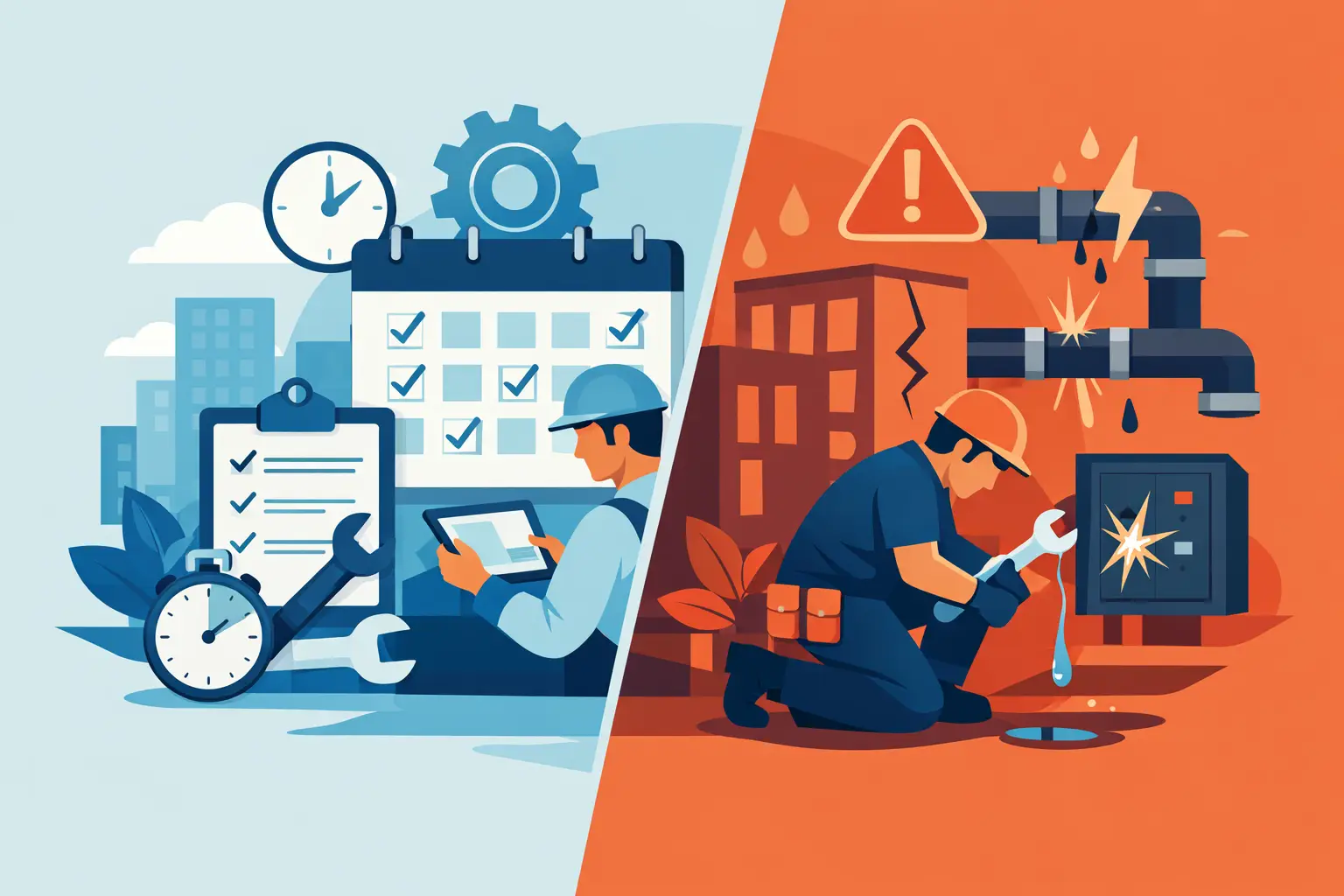
For facilities managers, landlords and business owners, the difference is straightforward. Planned preventive maintenance, often shortened to PPM, is a structured service programme designed to inspect, test, clean and maintain air conditioning and ventilation systems before faults develop into failures. Reactive repairs happen after something has already gone wrong. Both have a place, but they deliver very different outcomes.
What ppm maintenance vs reactive repairs really means
PPM maintenance is proactive. It is scheduled at defined intervals and built around the condition, age and usage of the equipment. A competent engineer checks refrigerant charge, electrical components, filters, coils, drains, controls and overall system operation. The aim is not only to keep the system running, but to keep it running efficiently, safely and within manufacturer expectations.
Reactive repairs are exactly what they sound like. A unit stops cooling, starts leaking, trips out, shows an error code or performs poorly enough that someone reports it. An engineer attends, diagnoses the problem and carries out a repair. This approach can feel simpler because you only spend money when there is an obvious issue. In practice, it often shifts costs into the least convenient and most expensive moment.
The key point is that these approaches are not equal alternatives for every site. A small, lightly used system in a low-risk environment may tolerate more reactive support than a busy retail space, office, server room or hospitality venue where downtime has immediate operational consequences.
Why reactive-only maintenance often costs more
Reactive repairs can appear cheaper on paper because they avoid a fixed servicing commitment. That logic usually holds only until the first significant breakdown. Once a fault causes a loss of cooling, restricted airflow or system shutdown, the bill is not just the engineer’s time and replacement parts. It often includes disruption, internal complaints, reduced trading conditions and pressure to restore service quickly.
Urgent call-outs also tend to narrow your options. If a failed fan motor or faulty PCB has taken a critical area offline, there is little appetite for careful budget planning. The priority becomes speed. That can mean premium rates, temporary measures and approval of repairs that might have been avoided with earlier intervention.
There is also the efficiency issue. Air conditioning systems rarely go from perfect to failed overnight. More often, performance declines first. Dirty coils, blocked filters, loose electrical connections or poor condensate drainage increase strain on components and push up energy consumption. A system may still be running, but it is working harder than it should. Businesses then pay twice – once through avoidable electricity use and again when neglected wear eventually leads to breakdown.
Where PPM delivers the strongest value
Planned maintenance creates value in three areas that matter to commercial operators: reliability, predictability and asset protection.
Reliability matters because HVAC is tied directly to building usability. In offices it affects comfort and concentration. In retail and hospitality it shapes customer experience. In IT rooms, healthcare environments and process-led spaces, failure can create a much more serious operational problem. PPM reduces the likelihood of unplanned outages by identifying wear, contamination and developing faults before they escalate.
Predictability matters because budgeting is easier when servicing is scheduled. A structured maintenance plan gives businesses greater control over when systems are inspected, what condition they are in and which remedial works should be prioritised. Instead of facing surprise repair bills, decision-makers can plan expenditure around actual asset condition.
Asset protection matters because HVAC equipment is a capital investment. Replacing compressors, major controls or complete systems is far more expensive than routine servicing. Good maintenance helps extend system life by reducing stress on key components and ensuring equipment operates within sensible parameters.
PPM maintenance vs reactive repairs for compliance and warranty
This is where many organisations underestimate the risk of a reactive-only approach. Air conditioning systems are not just convenience equipment. They sit within a wider compliance and duty-of-care framework. Depending on the installation, refrigerant charge and building type, operators may need documented servicing, leak checks and maintenance records to demonstrate that systems are being managed properly.
Manufacturer warranties are another factor. Many warranties require regular servicing by qualified engineers. If a major component fails and there is no service history, the warranty position can become difficult. What looked like a saving from skipped maintenance can turn into a direct replacement cost.
For commercial clients, documented maintenance is also useful operationally. It creates a record of inspections, faults, remedial actions and system condition over time. That helps with audit trails, landlord obligations, contractor management and long-term capital planning. It is much easier to make sensible asset decisions when there is clear service history behind them.
The trade-offs and where reactive repairs can still make sense
A balanced view matters here. PPM is not automatically the right level of service for every building or every budget. Some sites have older systems nearing replacement, low occupancy patterns or limited operational dependence on cooling. In those cases, a lighter-touch maintenance strategy with reactive support may be commercially reasonable.
There is also a difference between occasional reactive repair within a maintained estate and a fully reactive strategy. Even well-maintained equipment can still fail. Components age, external conditions vary and some faults are not foreseeable. PPM reduces risk, but it does not eliminate it. Any honest service partner should be clear about that.
The practical question is not whether you can operate reactively. Many businesses do. The real question is what level of downtime, uncertainty and repair exposure your site can absorb before that choice stops being cost-effective.
How to decide what your building needs
Start with criticality. If loss of cooling would affect trading, staff welfare, tenants, equipment or compliance, PPM should usually form the foundation of your strategy. The more critical the environment, the stronger the case for a structured plan with defined visit frequency and clear reporting.
Next, look at system age and condition. Newer equipment with a proper commissioning history may need less remedial input but still benefits from routine servicing to protect efficiency and warranty. Older systems often need closer monitoring because wear-related issues become more common and one failing component can place extra load on another.
Usage pattern matters too. A system running long hours in a restaurant kitchen area, open-plan office or busy shop will not have the same maintenance needs as a lightly used unit in a meeting room. Multi-site businesses should also be careful not to assume every location needs the same service level. A tailored programme is usually more effective than a one-size-fits-all contract.
Finally, consider how much visibility you currently have. If you do not know when filters were last changed, whether coils are clean, whether refrigerant levels are correct or whether records are up to date, that uncertainty is itself a sign that your maintenance approach may need attention.
What a sensible HVAC strategy looks like
For most commercial sites, the strongest approach is not ppm maintenance vs reactive repairs as an either-or choice. It is planned maintenance supported by responsive repair capability when faults still occur. That gives you the best chance of reducing breakdowns while ensuring there is a clear route to resolution when unexpected issues arise.
A dependable service programme should reflect the building, the equipment and the operational consequences of failure. It should include routine inspections, cleaning, performance checks, compliance-minded record keeping and practical recommendations on emerging issues. Just as importantly, it should be delivered by qualified engineers who can translate technical findings into business decisions.
That is the difference between buying maintenance as a basic tick-box exercise and using it as an asset management tool. A capable partner does more than service units. They help you understand where risk sits in your estate, which systems need attention first and how to protect performance without overspending.
For businesses across the Midlands, that usually means moving away from the false economy of waiting for failure and towards a maintenance strategy built around uptime, efficiency and accountability. The right plan is rarely the cheapest line on a spreadsheet in month one. It is the one that keeps your building operational when the pressure is on.