


Maintenance of Building: A UK Manager’s Guide to Asset Longevity
Did you know that reactive repairs can cost UK businesses up to 300% more than a planned preventative programme? For many facility managers in Warwickshire, a sudden failure in an ageing HVAC system isn’t just a technical hitch; it’s a financial drain that disrupts the entire budget. You likely feel the pressure of balancing daily operations with the strict demands of HSE and F-Gas compliance. It’s a common challenge to find reliable local contractors who truly understand the maintenance of building assets in the Midlands. We understand that you want to move away from firefighting emergencies and towards a strategy that offers genuine peace of mind.
This guide provides a practical framework to help you master your maintenance essentials, reduce those unexpected outgoings, and protect your property investment. We’ll examine how to streamline your compliance checks and implement bespoke service schedules that extend the life of your critical infrastructure. By the end of this article, you’ll have a clear roadmap to achieve lower operational costs and a more resilient facility.
Key Takeaways
- Learn how to balance technical preservation with administrative oversight to extend the lifespan of both historical and modern West Midlands assets.
- Master the “Four Pillars” of effective maintenance of building to ensure your Warwickshire property remains functional and safe while adhering to budget constraints.
- Understand the critical role of F-Gas compliance and why regular HVAC inspections are essential for meeting non-negotiable UK regulatory standards.
- Discover a logical framework for organising maintenance schedules, from conducting comprehensive asset audits to prioritising tasks by safety and operational impact.
- Find out why a bespoke, local maintenance partner provides superior reliability and specialised technical expertise compared to national service aggregators.
What is Maintenance of Building in the UK Context?
In the UK, maintenance of building refers to the combination of all technical and administrative actions intended to retain an asset in, or restore it to, a state in which it can perform its required function. It’s a core discipline within professional Facilities Management (FM) that ensures a property remains safe, functional, and efficient throughout its lifecycle. For a manager in the West Midlands, this often means balancing the preservation of Victorian-era masonry with the high-tech requirements of modern steel-framed developments in Birmingham’s city centre.
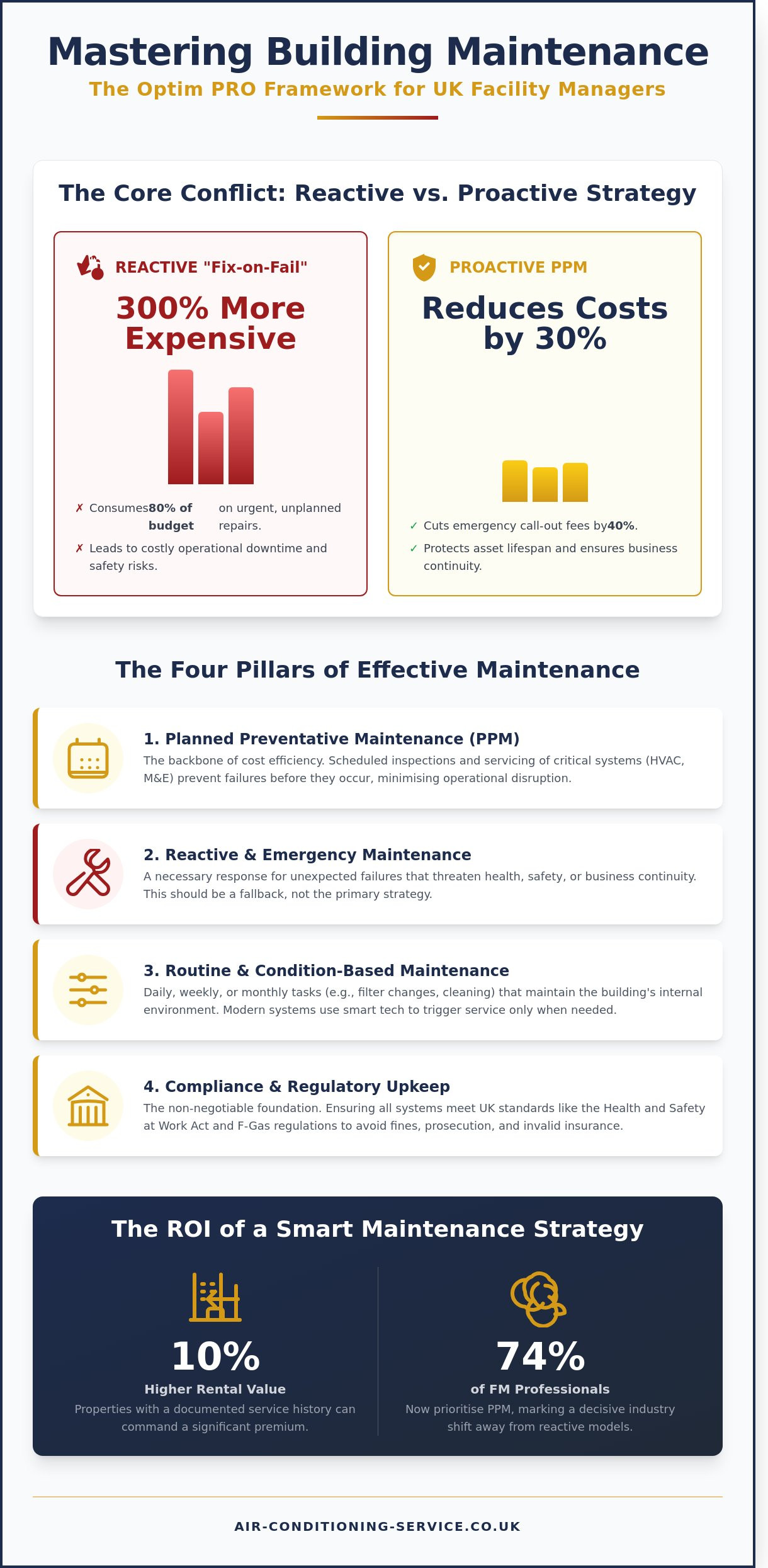
By 2026, the industry is moving rapidly toward proactive asset management. Data from the Building Services Research and Information Association (BSRIA) indicates that preventative strategies can reduce long-term repair costs by up to 30%. We’re seeing a shift where 74% of FM professionals now prioritise planned preventative maintenance (PPM) over reactive “fix-on-fail” approaches. This evolution ensures that systems like HVAC and electrical distribution don’t just survive but thrive under constant operational pressure.
The Legal Responsibility of Property Owners
Compliance isn’t optional. Under Section 2 of the Health and Safety at Work Act 1974, the designated Duty Holder has a legal obligation to ensure the premises are safe for employees and visitors. Failure to maintain essential services can lead to severe penalties. The Health and Safety Executive (HSE) issued £35.7 million in total fines across all sectors in 2022/23, often stemming from poor upkeep and safety failures. Negligence doesn’t just result in fines; it can invalidate your commercial insurance and lead to criminal prosecution if safety standards lapse.
Key Components of a Building Maintenance Strategy
A robust strategy requires a holistic view of the property. Effective maintenance of building standards generally falls into three distinct categories:
- Fabric maintenance: This covers the external envelope, including roofs, walls, and windows. In Britain, these elements must withstand high moisture levels and freeze-thaw cycles that can compromise structural integrity.
- Mechanical and Electrical (M&E) services: Often called the “heart” of a facility, this includes your heating, ventilation, and power systems. Regular servicing prevents the total system failures that halt business operations.
- Internal environment: This focuses on the daily experience of the building. It includes plumbing, lighting, and climate control, which directly impact occupant productivity and well-being.
The Four Pillars of Effective Building Maintenance
Successful maintenance of building assets requires a strategic blend of foresight and immediate action. In regions like Warwickshire, facility managers must navigate the tension between immediate quarterly budget constraints and the 30 year structural integrity of their properties. Data from the Royal Institution of Chartered Surveyors (RICS) indicates that properties with a documented service history can command a 10 per cent premium in rental value compared to neglected sites. By 2026, preventative maintenance will be established as the definitive cost-saving measure for UK commercial assets, moving from a discretionary spend to a critical financial strategy.
Balancing these pillars ensures that a property remains safe for occupants while protecting the landlord’s capital investment. It’s not just about fixing what’s broken; it’s about managing the lifecycle of every component from the roof to the HVAC system.
Planned Preventative Maintenance (PPM)
Scheduled inspections are the backbone of cost-efficient operations for UK businesses. For a Nuneaton warehouse or a Coventry office block, a bespoke PPM calendar ensures that critical systems are checked before failure occurs. Implementing a rigorous PPM schedule typically reduces emergency call-out fees by 40 per cent. This proactive approach allows managers to schedule works during low-occupancy periods, avoiding the disruption of unscheduled downtime.
Reactive and Emergency Maintenance
Corrective maintenance handles unexpected component failures that threaten business continuity. You should trigger an emergency response when health and safety are at risk, such as a total power failure or a major leak. Relying purely on reactive fixes is dangerous. It often leads to a scenario where 80 per cent of the maintenance budget is consumed by urgent repairs, leaving no capital for essential long-term structural improvements.
Routine and Condition-Based Maintenance
Day-to-day tasks like cleaning, filter changes, and groundskeeping keep Midlands offices professional and functional. Modern West Midlands properties now utilise smart building technology to monitor real-time performance. This condition-based approach means you only pay for a professional air conditioning service when sensor data indicates a drop in efficiency. This targeted method reduces waste and ensures maintenance of building systems is performed exactly when needed. Key benefits include:
- Reduced labour costs by avoiding unnecessary site visits.
- Extended lifespan of expensive plant machinery.
- Improved energy efficiency through optimised component performance.
- Enhanced data for future capital expenditure planning.
Compliance and F-Gas: Why Regulation Governs Maintenance Strategy
Effective maintenance of building systems isn’t just about avoiding breakdowns; it’s a legal obligation that protects your professional liability. In the UK, HVAC systems account for approximately 40% of a commercial building’s total energy consumption. When these units are poorly maintained, they leak refrigerants that have a global warming potential thousands of times higher than CO2. This environmental risk is why F-Gas regulations remain a non-negotiable part of your facility strategy. You must verify that your maintenance partner holds active Refcom certifications, as it’s a criminal offence to allow uncertified individuals to work on stationary refrigeration equipment.
Navigating F-Gas Regulations in 2026
Regulatory pressure on refrigerants is tightening. Since the January 2024 quota reductions, the market price of high-GWP refrigerants has increased by nearly 150%. By 2026, leak testing requirements will be even more stringent. Testing frequency is dictated by the CO2 equivalent tonnes of your AC units. For instance, systems containing 5 to 50 tonnes of CO2 equivalent require an inspection every 12 months. Optim PRO provides Midlands businesses with digital F-Gas logs, ensuring that every leak test and gas recovery is recorded accurately for Environment Agency audits. Accurate record-keeping is your best defence against the heavy fines associated with non-compliance.
Health and Safety Compliance (HSE)
The maintenance of building safety also encompasses water hygiene and electrical integrity. Legionella testing is a statutory requirement under the ACOP L8 guidelines. You must conduct regular risk assessments to prevent bacterial growth in cooling towers and domestic water systems. Failure to do so can lead to prosecution under the Health and Safety at Work Act 1974.
- Electrical Safety: Commercial properties in Warwickshire must have a valid EICR (Electrical Installation Condition Report) every 5 years, alongside annual PAT testing for portable appliances.
- Fire Safety: Fire alarms and emergency lighting require functional tests every month and a full professional service every 6 months.
- Water Hygiene: Temperature monitoring and showerhead descaling should occur quarterly to mitigate Legionella risks.
A structured compliance calendar prevents these essential tasks from slipping through the cracks. By integrating these statutory checks into your broader maintenance of building schedule, you create a safer environment for tenants while preserving the long-term value of the physical asset.
How to Organise a Maintenance Schedule for Midlands Properties
Organising the maintenance of building assets in Birmingham and the wider Midlands requires a clinical approach to asset tracking. You can’t manage what you haven’t documented. A successful schedule moves away from reactive “firefighting” and towards a structured, data-driven programme. This starts with a clear understanding of your site’s physical components and their current lifecycle stage.
The Audit: What Do You Actually Own?
Effective management begins with a full audit of your Birmingham site. You need to record the installation dates, serial numbers, and current performance metrics of every mechanical and electrical system. A 10-year-old chiller might still run, but its efficiency likely dropped by 20% compared to modern inverter technology. Focus your audit on high-risk areas, such as server rooms or production lines, where a system failure costs upwards of £5,000 per hour in lost productivity. This data forms the backbone of your 2026 replacement strategy.
- Create a digital asset register for all HVAC and electrical systems.
- Assess the efficiency of units against current Part L Building Regulations.
- Identify assets nearing the end of their 15-year typical operational life.
Budgeting for Building Upkeep
Financial planning should follow the Total Cost of Ownership (TCO) model. This looks beyond the initial purchase price to include energy consumption and repair costs over the asset’s entire lifespan. To maintain the maintenance of building standards effectively, allocate 80% of your budget to planned preventative maintenance (PPM) and reserve 20% for emergency reactive works. You can justify this spend to stakeholders by highlighting that well-maintained AC systems reduce annual energy bills by up to 35%.
Prioritise tasks using the SFG20 standard to ensure legal compliance and safety. You must decide if your in-house team has the specific F-Gas certifications required for refrigerant handling or if you need specialist contractors. Outsourcing to Refcom-certified engineers ensures that complex tasks meet UK safety regulations and environmental laws. Review these service level agreements annually to ensure your 2026 programme remains cost-effective and technically sound.
Ensure your facility stays compliant and efficient by partnering with experts who understand Midlands infrastructure. Book a professional building asset audit today to secure your 2026 maintenance strategy.
Expert Building Maintenance and HVAC Solutions in Warwickshire
Choosing a local Midlands partner offers advantages that national aggregators cannot match. While large firms often outsource to third-party contractors, Optim PRO maintains a direct team of engineers rooted in Warwickshire. This local presence ensures a 4-hour response time for critical failures, preventing minor issues from escalating into structural damage. Effective maintenance of building systems requires an intimate understanding of regional infrastructure and climate demands. Our approach integrates HVAC expertise with general property health, as poor ventilation often leads to dampness and accelerated wear on interior finishes.
In 2023, we partnered with a Nuneaton-based retail centre facing frequent plant failures. By implementing a structured schedule, we reduced system downtime by 34% and lowered emergency repair costs by £4,200 within the first twelve months. This synergy between air conditioning expertise and property management ensures that your physical assets remain efficient and your tenants remain comfortable.
Bespoke Maintenance Contracts
We don’t believe in one-size-fits-all agreements. A high-footfall retail environment requires a different strategy than a temperature-sensitive server room where a 2-degree fluctuation can cause hardware failure. Our West Midlands clients benefit from 24/7 emergency support, ensuring that business continuity remains intact even during peak seasonal demands. Every contract includes full F-Gas compliance. Our certified engineers manage all regulatory documentation, protecting you from legal liabilities and ensuring your maintenance of building standards meet UK law.
Get Started with a Maintenance Audit
Your first professional site survey with Optim PRO provides a comprehensive baseline of your facility’s health. We move you away from a reactive “fix-on-fail” loop toward a proactive asset strategy that can extend equipment life by up to 25%. During the audit, we examine ductwork hygiene, electrical efficiency, and refrigerant levels to provide a clear roadmap for your property. This transition reduces unexpected capital expenditure and allows for more accurate annual budgeting. Book your building maintenance consultation with Optim PRO today!
Future-Proof Your Property Portfolio
Effective maintenance of building assets requires more than a reactive mindset. By prioritising the four pillars of maintenance and strictly adhering to F-Gas regulations, UK facility managers can extend equipment lifespans by up to 15 years. Our Refcom certified engineers in Nuneaton understand that a missed service can lead to a 20% increase in energy costs; a figure that adds up quickly for commercial cooling and critical server room environments.
We provide local, expert support throughout the West Midlands to ensure your infrastructure remains a reliable asset rather than a liability. Whether you’re managing a single site in Warwickshire or a portfolio across Birmingham, a structured approach protects your bottom line and ensures 100% regulatory compliance. Our team is ready to help you navigate these technical requirements with confidence and clarity.
Request a Bespoke Maintenance Quote for Your Midlands Property
It’s time to transform your facility management from a cost centre into a driver of long-term efficiency and reliability.
Frequently Asked Questions
What is included in the maintenance of a building?
The maintenance of a building includes the upkeep of structural elements, mechanical systems, and electrical installations to ensure safety and functionality. A standard programme covers HVAC servicing, fire alarm testing, plumbing repairs, and fabric maintenance like roof inspections. We follow SFG20 standards to ensure every asset, from the boiler to the emergency lighting, remains compliant and operational.
How often should a commercial building undergo a full maintenance inspection?
A comprehensive building inspection should occur at least once every 12 months, though individual components require more frequent attention. For instance, air conditioning systems typically need servicing twice a year to maintain efficiency. Fixed wire testing (EICR) is a statutory requirement every 5 years for most commercial properties, while fire extinguishers need annual certification by a qualified engineer.
Is building maintenance a legal requirement for UK businesses?
Yes, several aspects of building maintenance are mandatory under UK legislation, such as the Health and Safety at Work etc. Act 1974. You’re legally required to maintain gas systems under the 1998 Safety Regulations and manage asbestos under the 2012 Control of Asbestos Regulations. Neglecting these duties can result in unlimited fines or prosecution if an incident occurs on your premises.
What is the difference between building maintenance and facilities management?
Building maintenance focuses specifically on the physical upkeep and repair of the property’s infrastructure and assets. Facilities management is a broader discipline that includes maintenance alongside “soft” services like cleaning, security, and space planning. While maintenance ensures the air conditioning works, facilities management ensures the entire office environment supports the productivity of the people inside it.
How much does a building maintenance contract cost in the Midlands?
In the Midlands, a planned preventative maintenance (PPM) contract for a 5,000 square foot office typically starts between £2,000 and £4,500 per year. Prices vary based on the age of your equipment and the number of assets requiring service. Large industrial facilities in hubs like Birmingham or Derby often see bespoke contracts exceeding £12,000 annually to cover complex plant machinery.
What happens if my building fails an F-Gas compliance inspection?
If you fail an F-Gas inspection, you’ll receive a notice detailing the required remedial actions, such as repairing a leak or updating your F-Gas logs. You must resolve these issues within 14 days to avoid further enforcement. The Environment Agency has the power to issue civil penalties of up to £200,000 for serious or repeated breaches of these environmental regulations.
Can I perform building maintenance tasks myself?
You can perform basic tasks like visual inspections or changing lightbulbs, but statutory maintenance must be completed by competent, certified professionals. It’s illegal for an unqualified person to work on gas lines or handle refrigerants. Our Refcom-certified engineers ensure your technical systems meet UK safety standards, protecting your insurance validity and ensuring the safety of your staff.
How does regular maintenance improve energy efficiency in 2026?
Regular maintenance of building systems ensures that HVAC units and electrical plant operate at their peak Coefficient of Performance, which can reduce energy consumption by 30%. By 2026, stricter Minimum Energy Efficiency Standards (MEES) will make this efficiency vital for property compliance. Clean filters and calibrated sensors prevent “energy drift,” keeping your utility bills low and your EPC rating high.