

Heat Recovery Versus Extractor Fans Compared
A toilet block that smells stale by mid-afternoon, condensation around changing-room windows, or staff complaints about stuffy meeting rooms all point to the same operational issue: ventilation is not keeping pace with the building. When considering heat recovery versus extractor fans, the right answer is rarely about choosing the most familiar unit. It is about providing dependable fresh air, controlling energy use and maintaining a system that suits how the premises actually operate.
For Midlands businesses, that decision can affect occupier comfort, running costs, compliance evidence and the amount of disruption involved when equipment needs attention. Extractor fans and heat recovery ventilation both have clear roles. They simply solve different versions of the ventilation problem.
Heat recovery versus extractor fans: the key difference
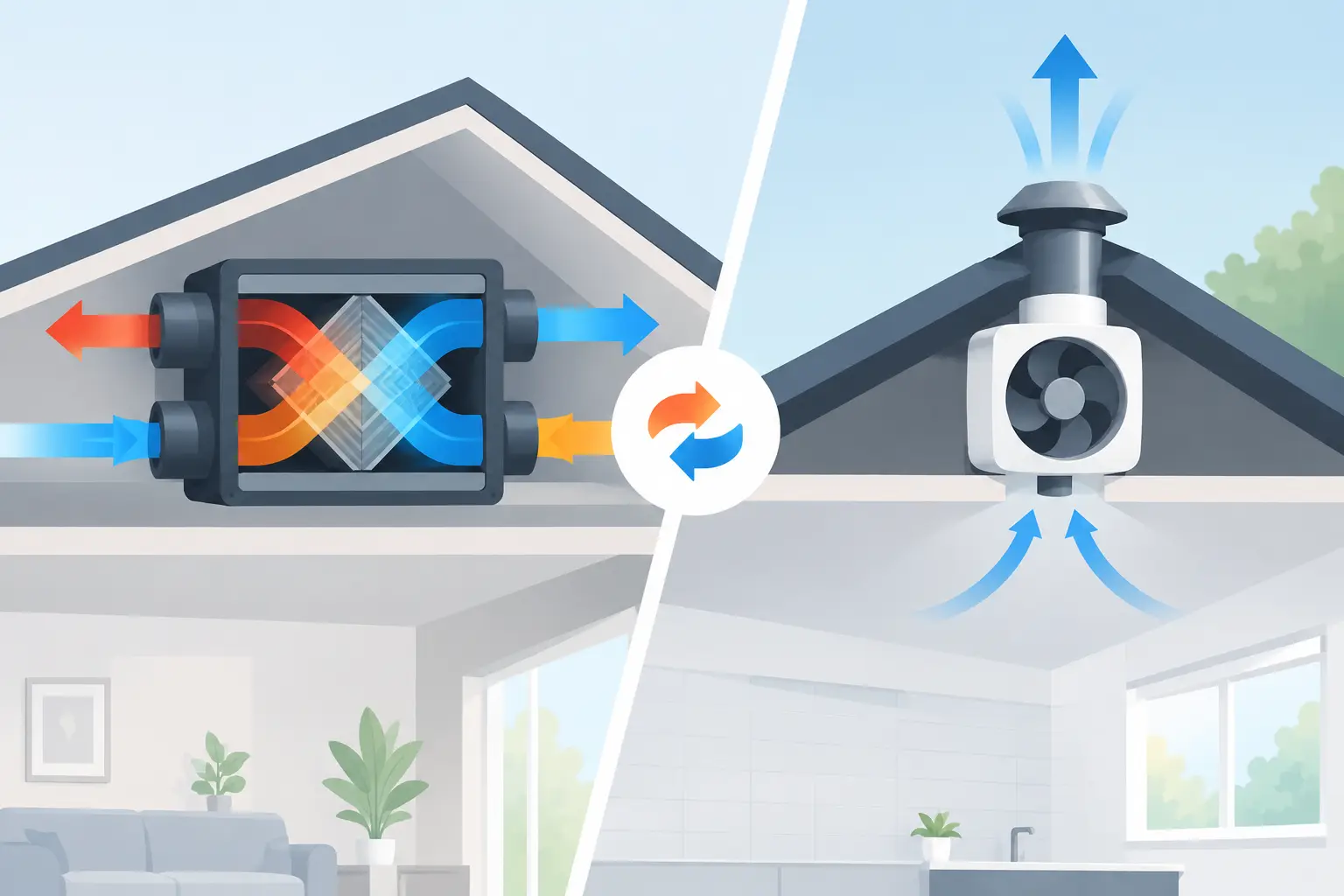
An extractor fan removes stale, humid or contaminated air from a space. It is commonly installed in toilets, kitchens, shower rooms, utility areas and small commercial spaces. Replacement air then enters through air vents, door undercuts, open windows or other planned routes. The system is relatively simple, targeted and often cost-effective where the main need is moisture or odour extraction.
A mechanical ventilation with heat recovery system, often called MVHR, extracts stale air while supplying filtered fresh air to occupied rooms. Before the extracted air leaves the building, its heat passes through a heat exchanger to warm the incoming fresh air. The air streams remain separate, but a substantial proportion of the heat can be retained.
That distinction matters most in heated buildings with regular occupancy. An extractor-only arrangement can remove warm air and draw in colder outdoor air during winter. Heat recovery ventilation reduces that heat loss while providing controlled supply and extract ventilation. It may therefore support lower space-heating demand, particularly in airtight or recently refurbished premises.
Neither system automatically guarantees good indoor air quality. Fan duty, airflow design, commissioning, controls, filter condition and ongoing maintenance all determine whether a system performs as intended.
When extractor fans are the practical choice
Extractor fans remain the sensible option in many applications. In a small retail WC, a single staff kitchen, a bin store or an infrequently used shower area, the objective is normally local extraction rather than whole-building ventilation. A correctly sized fan, duct route and external discharge point can deal with moisture and odours without the cost and space requirements of a full heat recovery installation.
They also work well as part of a wider strategy. For example, a commercial kitchen may need dedicated extract because of cooking vapours and heat loads, while office areas use a separate fresh-air or comfort cooling system. A heat recovery unit is not a substitute for specialist kitchen extract design, and grease-laden air should not be routed through standard MVHR equipment.
Extractor systems can be easier to retrofit where ceiling voids are limited or the building layout does not allow supply ductwork to reach each occupied area. Initial investment is usually lower, which can be decisive for landlords dealing with a focused ventilation issue or businesses operating from a compact unit.
The trade-off is that extract-only ventilation relies on a reliable route for replacement air. If trickle vents are closed, doors are tightly sealed and there is no designed make-up air path, extraction rates can fall and drafts may develop where outside air finds its own way in. This is a common reason why a new fan does not solve a persistent condensation or air-quality complaint.
Where heat recovery adds value
Heat recovery is most effective where a building is occupied for extended periods, is reasonably airtight and requires consistent fresh air across multiple rooms. Offices, education settings, care environments, flats, meeting suites and well-insulated commercial refurbishments are common examples.
The benefits are operational as well as thermal. A balanced system can provide a more controlled airflow pattern, reducing the reliance on opening windows in winter or beside noisy roads. Filters can improve the quality of supplied air by capturing outdoor particulates, provided they are selected appropriately and changed on schedule. In spaces where concentration, comfort and staff wellbeing matter, this can be a meaningful improvement.
For a business reviewing energy performance, the central advantage is straightforward: it is inefficient to heat air and then continuously throw that heat outside. Heat recovery reduces this loss, but its financial case still depends on occupancy, heating fuel, operating hours, existing fabric performance and the cost of installation. It should be assessed against real building data rather than assumed savings.
Heat recovery equipment requires more infrastructure than a typical extractor fan. Supply and extract ducts, grilles, condensate drainage, access for filters and careful balancing all need to be planned. In an occupied office or a listed building, retrofit constraints may outweigh the energy benefit. In a major refurbishment, however, installing the right ventilation routes before ceilings are closed can make heat recovery considerably more viable.
Air conditioning does not replace ventilation
This distinction is often missed in commercial premises. Split air conditioning systems recirculate and condition indoor air. They can cool, heat and dehumidify a space, but they do not usually introduce enough outdoor air to meet a building’s ventilation requirement.
Where comfort cooling is already installed, a separate ventilation strategy may still be needed to manage carbon dioxide levels, humidity, odours and fresh-air provision. Integrating controls can prevent systems working against each other, such as cooling a room while unnecessary warm outside air is introduced.
Cost, maintenance and compliance considerations
The lower purchase price of an extractor fan should not be confused with lower lifetime cost in every setting. Fans need regular cleaning, checks to dampers and ductwork, and prompt repair if bearings, controls or electrical connections fail. A neglected extract system can become noisy, underperforming and ineffective long before it stops completely.
MVHR systems bring additional maintenance requirements. Filters need inspection and replacement at intervals appropriate to the location and level of outdoor pollution. Heat exchangers, condensate drains, fans, sensors and ductwork should be checked as part of planned servicing. Poorly maintained filters restrict airflow, increase fan energy use and reduce the expected air-quality benefit.
For commercial operators, maintenance records matter. They help demonstrate that ventilation equipment has been inspected, faults have been addressed and the system is being managed responsibly under workplace health and safety duties. They also support budgeting: a scheduled service visit is generally easier to manage than an urgent response to widespread condensation, mould concerns or a failed fan in a customer-facing area.
Compliance requirements vary by building type, use and project scope. New works and substantial alterations may need to meet relevant Building Regulations requirements, while employers must provide an adequate supply of fresh or purified air in the workplace. Specialist settings, including healthcare, food preparation and critical environments, can have more demanding ventilation standards. The system specification should therefore follow a site assessment, not a like-for-like product swap alone.
Questions to answer before selecting a system
A useful decision starts with the source of the problem. Is the concern local humidity after showers, persistent odours, overheating, high occupancy, poor air quality, or all of these? A fan designed for a small WC will not resolve inadequate ventilation in a densely occupied open-plan office.
Next, establish how air can enter and leave the building. Measure existing airflow where possible, inspect duct runs and external terminals, and consider whether the building fabric has changed since the original system was installed. New windows, insulation upgrades and internal partitions can alter ventilation performance significantly.
Finally, consider the life of the asset. If a lease event, refurbishment or replacement of heating and cooling equipment is approaching, this may be the right time to assess heat recovery. If the requirement is limited to a single wet area and the existing air path is sound, a well-specified extractor fan may be the more proportionate investment.
Optim PRO approaches ventilation as part of the wider climate-control picture, considering equipment condition, system access, maintenance needs and the business impact of failure. A site survey can identify whether better extraction, balanced heat recovery ventilation or a combined approach will provide the most reliable outcome.
The most effective choice is the one that matches the building, not the brochure. Start with how the space is used and where the air is failing, then put in place a system and servicing plan that keeps occupants comfortable without creating avoidable energy waste or future disruption.